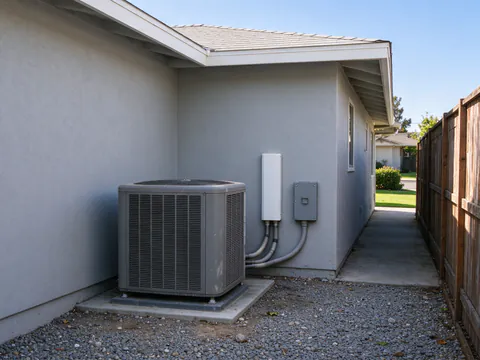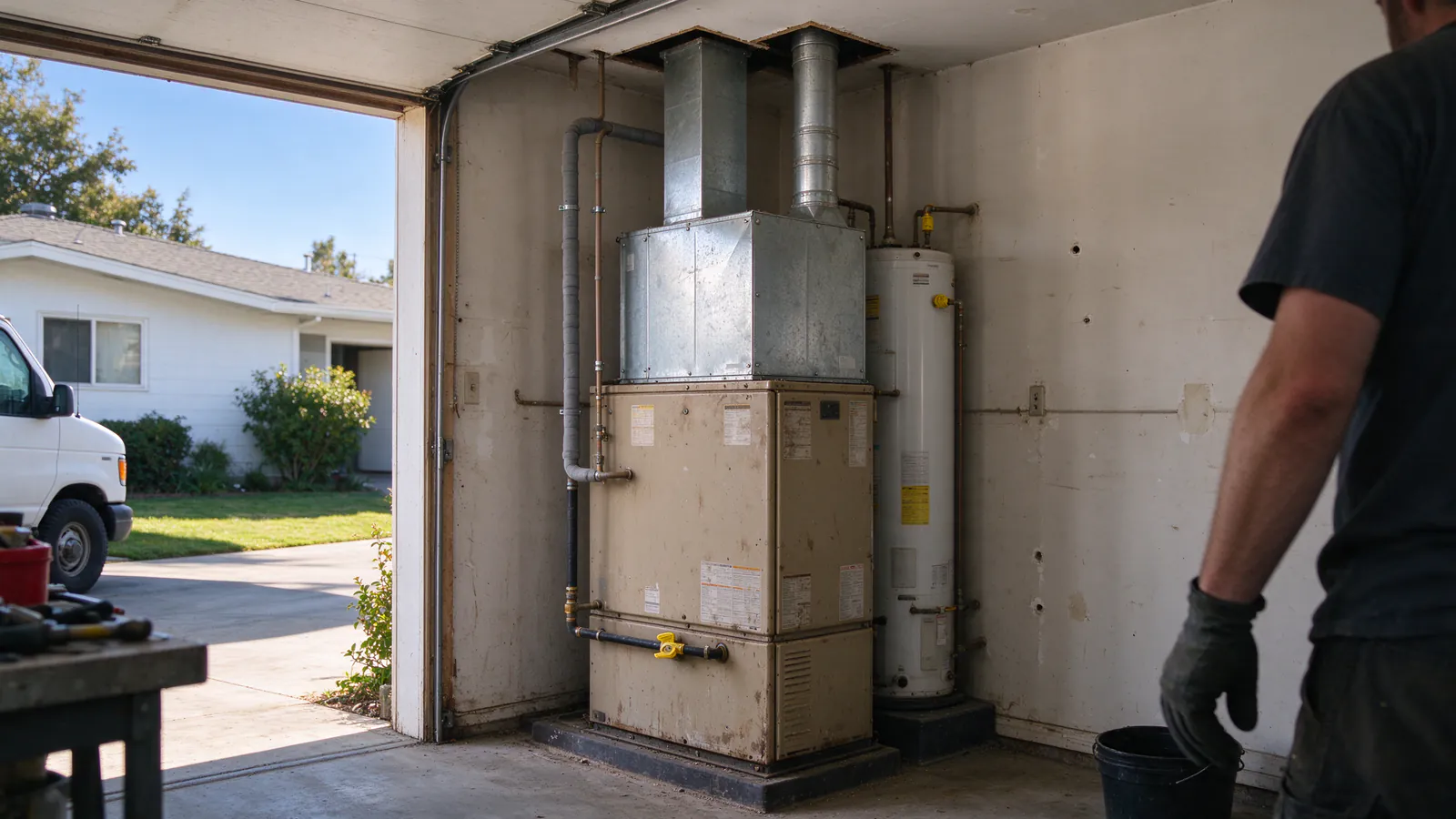
No rule in effect requires an existing Sacramento home to give up a working gas furnace, or to replace a failed one with a heat pump. California’s heat pump requirement in Title 24 applies to new construction. The City of Sacramento has adopted a goal of all-electric existing buildings by 2045, and it has said it will not mandate immediate appliance replacement to get there.
Tule Sacramento Heat Pump converts gas furnace and AC systems to ducted heat pumps across the Sacramento region, through licensed and insured contractors. Because the site sells conversions, this guide is careful to separate what is required from what is simply a good idea for some houses.
What the rules actually say
Several different things get called a gas furnace ban. They apply to different buildings and different decisions.
| Rule or policy | What it does | Applies to an existing home’s furnace? |
|---|---|---|
| 2025 Title 24 standards, new construction | Prescriptive path requires heat pumps for space conditioning in all climate zones | No; new construction only |
| Title 24, alterations | Permit, duct sealing and ECC-Rater verification when HVAC equipment is replaced | Yes, but it does not require a heat pump |
| City of Sacramento electrification strategy | Goal of all-electric existing buildings by 2045 | No immediate replacement mandate |
| SB 222 | Streamlines heat pump permits, caps fees, voids HOA rules blocking gas-to-electric swaps | Makes switching easier; requires nothing |
| EPA refrigerant rule | Limits refrigerant in new AC and heat pump equipment | Affects heat pumps and ACs, not furnaces |
Title 24 and new homes
The California Energy Commission’s 2025 single-family HVAC guidance says Section 150.1(c)6 requires heat pumps for space conditioning in all climate zones for new construction. A builder who wants a gas furnace can still model one through the performance path, which balances it against other measures in the design.
Title 24 and replacements
For an existing home, the same code treats an HVAC replacement as an alteration. It requires a permit, duct sealing and testing, and refrigerant charge verification where a heat pump or AC is installed. Nothing in the CEC’s alteration guidance requires the new equipment in an existing home to be a heat pump. The permit and Title 24 guide covers what an alteration triggers.
The City of Sacramento’s electrification strategy
The City Council adopted the Existing Building Electrification Strategy unanimously on May 14, 2024. It implements measure E-3 of the Climate Action and Adaptation Plan, adopted February 27, 2024, which sets a goal of all-electric existing buildings by 2045.
What the City said it will not do
The City’s FAQ on the strategy states that with its adoption, the City will not establish mandatory requirements for immediate appliance replacements or building retrofits. A homeowner in the city can replace a furnace with a furnace. The goal is a direction, backed by programs and incentives, not a deadline attached to your next breakdown.
Outside the city limits
Sacramento County, Elk Grove, Roseville and the other cities and counties in the region set their own policies. No local mandate for existing homes is described in the sources behind this guide, and any rule a jurisdiction adopts would appear in its own code and permit requirements.
Proposals versus adopted rules
News stories often describe a proposed statewide or regional standard as if it were already law. A proposal can change before adoption, carry a future effective date, or apply only to new equipment sold rather than to equipment already installed.
What SB 222 changes for homeowners
SB 222 (Chapter 738, Statutes of 2026), approved September 28, 2026, does not require anyone to switch. It removes friction for those who do:
- HOA rules that prevent a gas-to-electric replacement are void
- permit fees for a residential heat pump HVAC system are capped at $200 unless a jurisdiction adopts written findings
- cities and counties must offer asynchronous inspections from July 1, 2027
- automated online permitting for licensed contractors is due by July 1, 2028
What actually sets the timing
Without a mandate, the decision comes down to the house, the equipment and the electric rate.
The furnace’s condition
A furnace near the end of its life, or an air conditioner that has failed, is the natural moment to convert, because the work replaces equipment that needed replacing anyway. A furnace with years left makes dual fuel or a heat pump in place of the AC worth a look.
Your electric utility
PG&E supplies gas across the region, but three utilities supply electricity, and the gap is large. Working from published tariffs, a heat pump has to average a COP of only about 1.4 to 2 to heat for less than a 95% furnace on SMUD’s winter rates, and about 3.1 to 3.5 on PG&E’s E-ELEC plan. The heat pump vs gas furnace guide runs the comparison.
Incentives that remain
SMUD pays up to $3,000 on qualifying gas-to-electric heat pump systems installed by a participating contractor in the SMUD Contractor Network, plus additional Go Electric rebates toward panel and circuit work. TECH Clean California, HEEHRA and the federal 25C credit are no longer available. The SMUD rebate guide and the California rebate guide track status.
If you decide to switch
A conversion replaces the furnace and AC with one ducted heat pump, caps the gas line to the furnace and closes off the old flue. It may need panel work, covered in the panel upgrade guide, and the ducts are tested under Title 24 either way. The gas furnace to heat pump conversion page covers the scope, and the cost estimator gives a budget figure. For a written comparison of your options, call (916) 516-1454 or request an estimate.