Tule Sacramento Heat Pump designs and installs dual fuel systems across the Sacramento region: an electric heat pump added to the gas furnace a house already has, with the work done by licensed and insured contractors. The heat pump cools in summer and heats through most of the winter. The furnace takes over only below an outdoor temperature you choose.
The setup suits a furnace with years of life left, a house on PG&E electric rates, or an owner who wants gas heat on hand for the coldest mornings. The design decision is where to set the changeover, and the right answer depends more on your electric utility than on the equipment.
How a dual fuel system splits the work
A dual fuel system runs one heat source at a time. Above the changeover temperature the heat pump heats; below it, the controls lock out the compressor and fire the furnace. The furnace blower moves air for both, so the ducts, filter and thermostat serve one system with two ways to make heat.
Where the heat pump coil sits
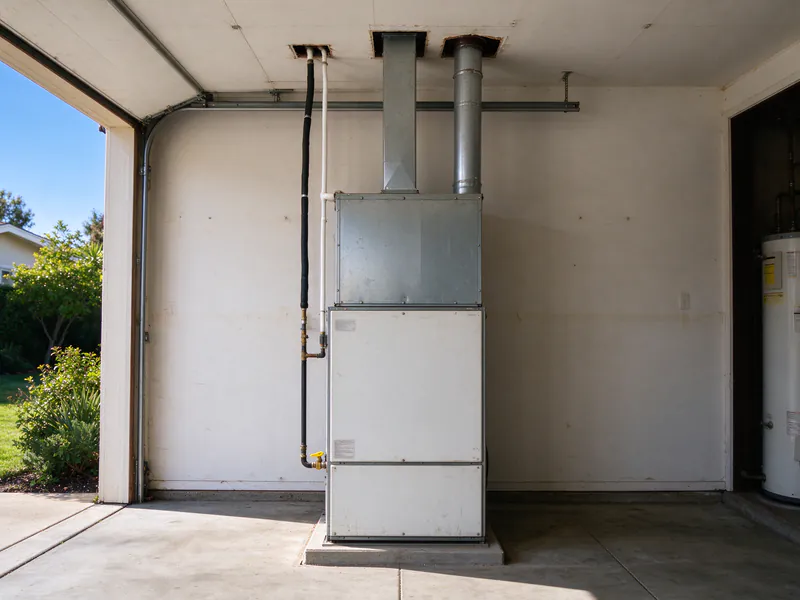
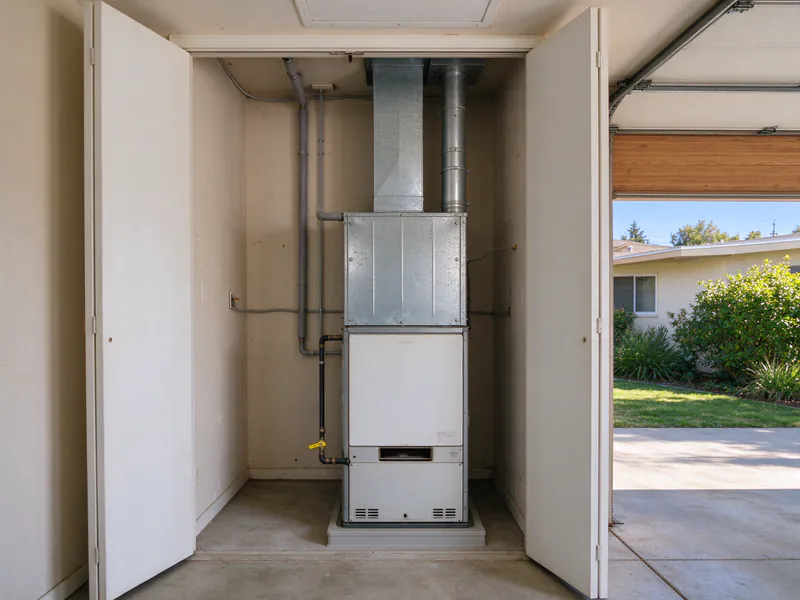
The heat pump’s indoor coil mounts on the furnace, downstream of the heat exchanger. In cooling and heat pump heating the burners stay off and the coil does the work. When the furnace runs, its hot air passes through the idle coil.
Why the two don’t run together
If the compressor kept running while the furnace fired, furnace air flowing over the coil would push refrigerant pressures past what the system is built for. The control’s job is to hand off cleanly and keep the compressor off whenever the burners are lit.
What happens on the first visit
The visit checks whether the furnace can be the backup half of a matched system.
- The furnace. Age, efficiency rating, heat exchanger condition, venting, and whether its blower is single-speed or variable-speed.
- The cabinet. Width and height above the furnace, which decide whether a matched coil fits without major sheet-metal changes.
- The load. A Manual J calculation and the heat pump’s rated output at low outdoor temperatures, which set the thermal balance point.
- The ducts. Static pressure and return size, since the furnace blower must deliver heat pump airflow.
- Your rates. SMUD, Roseville Electric or PG&E, the rate plan, and what else in the house uses gas.
The scope names the heat pump, the coil, the control, the changeover setting and the permit.
Choosing the changeover temperature
The thermal balance point
The thermal balance point is the outdoor temperature at which the heat pump’s output falls to the house’s heat loss. Below it, the heat pump alone can’t hold the setpoint. The California Energy Commission lists a 31°F heating design for Sacramento’s airport station, and NOAA’s normals there count essentially no nights at 20°F or below. A heat pump sized for the summer load may cover the house to near the design temperature; the heat pump sizing guide shows how both loads are built.
The economic balance point
The economic point is where gas becomes cheaper per unit of heat than the heat pump. It depends on the coefficient of performance, or COP, which falls as the outdoor air gets colder, and on your prices.
| Winter electric rate | Price per kWh | Heat pump beats a 95% gas furnace above COP |
|---|---|---|
| SMUD Time-of-Day, off-peak | $0.1285 | 1.41 |
| SMUD Time-of-Day, 5 to 8 p.m. peak | $0.1776 | 1.95 |
| Roseville Electric, Tier 2 | $0.1989 | 2.18 |
| PG&E E-ELEC, off-peak | $0.28468 | 3.13 |
| PG&E E-ELEC, 4 to 9 p.m. peak | $0.32063 | 3.52 |
These break-even values are derived from the published tariffs and PG&E’s residential gas rate, energy charges only. On SMUD’s prices the heat pump stays ahead of gas into cold weather, so a SMUD household sets the changeover for comfort. On PG&E’s prices the bar sits above 3, so the furnace has a real economic case on the coldest mornings.
Setting it in practice
The control gets the higher of the two points. Some controls can also switch to the furnace during the utility’s peak hours, which a PG&E household may want. The setting is reviewed after the first cold snap, because the real heat loss of a house rarely matches a calculation exactly.
Where dual fuel makes sense here
PG&E electric territory
West Sacramento, Davis, Rocklin and El Dorado Hills buy electricity from PG&E or a community choice supplier on PG&E’s wires, while gas comes from PG&E everywhere in the region. There the economic balance point sits highest, and keeping a working furnace for the coldest hours trims winter bills.
The colder edges of the region
Rocklin’s heating design is 26°F at the 0.2% level, five degrees colder than Sacramento’s airport, and the El Dorado County foothills run colder still. Across El Dorado County 27% of households heat with propane, against 2% in Sacramento County, and propane’s price shifts the balance point down.
When a full conversion fits better
In SMUD territory, with a furnace near the end of its life, dual fuel keeps a gas appliance the household may not need, and SMUD does not state whether the arrangement qualifies for its rebate. Gas furnace to heat pump conversion covers that path, and the heat pump vs gas furnace guide compares the two. If the AC has just failed and the choice is still open, replacing the AC with a heat pump lays out all three options.
Defrost on tule fog mornings
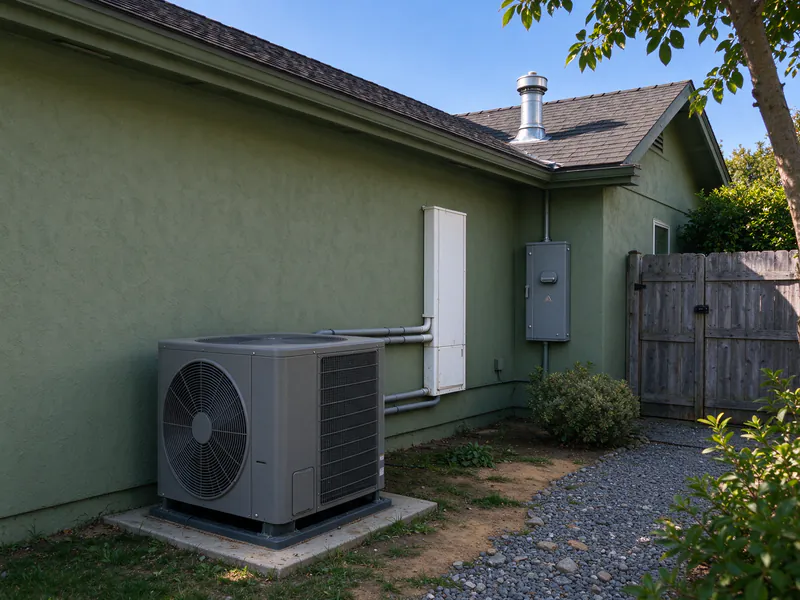
NOAA’s normals for Sacramento Executive Airport put the January 7 a.m. temperature at 41.6°F, with one morning in ten near 32°F and a dew point around 41°F. Fog-season air near freezing frosts the outdoor coil often, and the heat pump reverses briefly to clear it. During those minutes the indoor coil is cooling the air.
An all-electric system covers defrost with strip heat. In a dual fuel system the control can fire the furnace for the defrost cycle instead, so the registers don’t blow cool air. The aux heat and defrost guide explains the settings and what normal frost looks like.
Furnace, coil and controls compatibility
The blower
The heat pump needs at least 300 cfm per ton of airflow under Title 24’s charge verification. An older single-speed blower may be wired for a smaller AC, or may not reach that airflow through restrictive returns. A variable-speed furnace blower handles the job more easily, and where returns are the bottleneck, heat pump ductwork covers the fix.
The coil and refrigerant
New heat pumps use lower-GWP refrigerants such as R-454B or R-32, and the coil must be rated with the outdoor unit. The R-454B guide explains the change. The old AC coil is replaced, and the new one is sealed to the cabinet with its drain trapped and protected by an overflow switch.
The combustion side
The furnace keeps burning gas, so its venting, flue connection and combustion are checked as their own task, separate from the heat pump work. A cracked heat exchanger or a failing flue is a reason to reconsider the plan.
Controls and testing
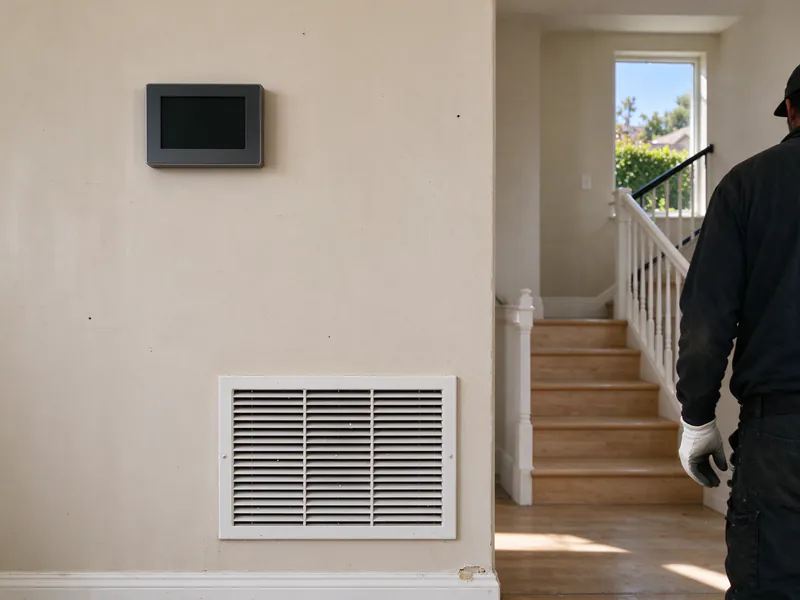
The thermostat needs an outdoor sensor or equivalent control logic, compressor lockout and furnace staging. Title 24 treats the outdoor unit installation as an alteration that triggers duct sealing and an ECC-Rater visit, with refrigerant charge verified as on any heat pump.
Rebates, rate plans and the gas bill
SMUD’s heat pump rebate is written for systems that replace gas heating or an existing electric system, and SMUD does not state whether a heat pump added to a kept gas furnace qualifies. That is confirmed before equipment is chosen, and the SMUD rebate guide lists the program terms. Roseville Electric lists no residential heat pump rebate, and no PG&E single-family rebate was found.
What the gas account still costs
PG&E’s E-ELEC rate is limited to households using a heat pump as their primary heating and cooling, so eligibility for a dual fuel home is confirmed with PG&E. On the gas side, PG&E’s residential schedule keeps a minimum transportation charge of $0.13151 a day whether or not the furnace runs. The electric bill guide runs both bills together.
What a dual fuel installation costs
No local program data isolates dual fuel projects, so they are priced from the work each furnace needs. The drivers are the coil and any cabinet transition, the furnace’s blower and condition, the dual fuel control and thermostat, the line set, the outdoor circuit and any venting correction. The installation cost guide covers the shared components, and the cost estimator gives a range for full conversions to compare against.
Keeping a gas furnace under California’s rules
Yes. The City of Sacramento’s electrification strategy does not require immediate appliance replacement, and Title 24’s heat pump baseline applies to new homes. The California gas furnace rules guide separates adopted rules from proposals.