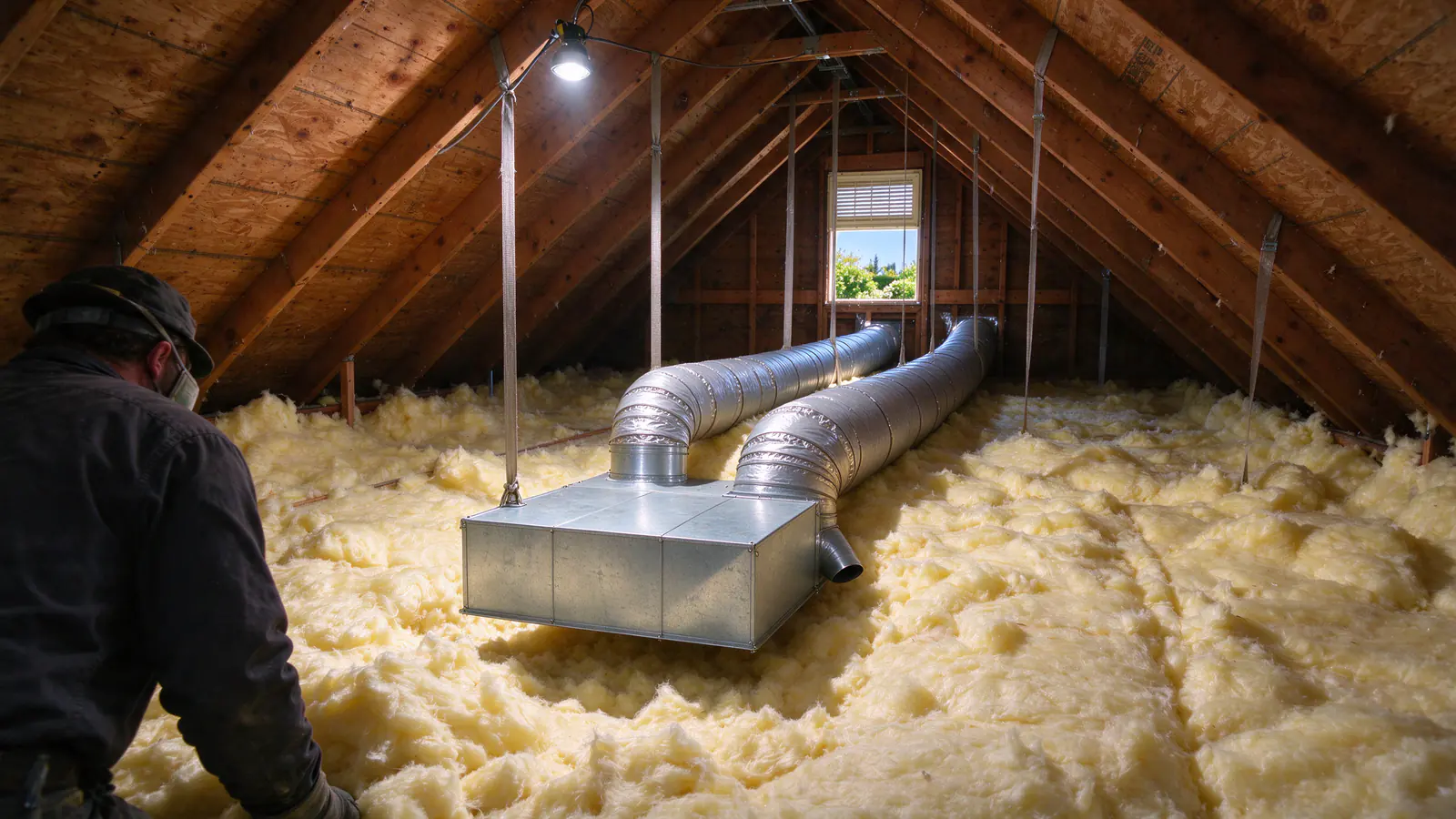
Tule Sacramento Heat Pump tests, repairs and replaces ductwork for ducted heat pumps throughout the Sacramento region, from the county itself to south Placer, east Yolo and El Dorado Hills. Licensed and insured contractors do the work. The ducts decide how much of the heat pump’s rated capacity reaches the rooms. A new outdoor unit on leaking, crushed or undersized ducts runs harder, sounds louder and still leaves the back bedroom warm.
Why a heat pump is harder on ducts than a furnace
Furnace air leaves the cabinet hot enough that even a thin trickle from a leaky run feels warm on your hand, so duct problems can hide for decades. A heat pump heats with cooler supply air and makes up for it with volume.
More air through the same ducts
Title 24 asks for a minimum of 300 cfm of airflow for each ton when the heat pump refrigerant charge is verified. Ducts sized for a furnace with a small air conditioner may not carry that. The extra air raises static pressure, the resistance the blower works against, and the blower either gets louder or delivers less.
Where the losses show up
A leak in the attic costs more in summer than in winter here. The California Energy Commission puts Sacramento’s 1% cooling design at 98 degrees, and attic ducts sit in air hotter still. Cool air lost through a torn boot or a disconnected run is paid for twice: once by the heat pump and again by the room that never gets it. The hot weather guide explains the summer side.
What happens on the first visit
Before anyone decides to keep or replace the ducts, they get measured.
- Duct leakage. A pressurized test of the whole system, or a record of an earlier ECC-Rater test if one exists.
- Static pressure. Readings across the blower and filter, the clearest sign of undersized ducts or a starved return.
- Room airflow. Supply at each register compared with what each room needs from the load calculation.
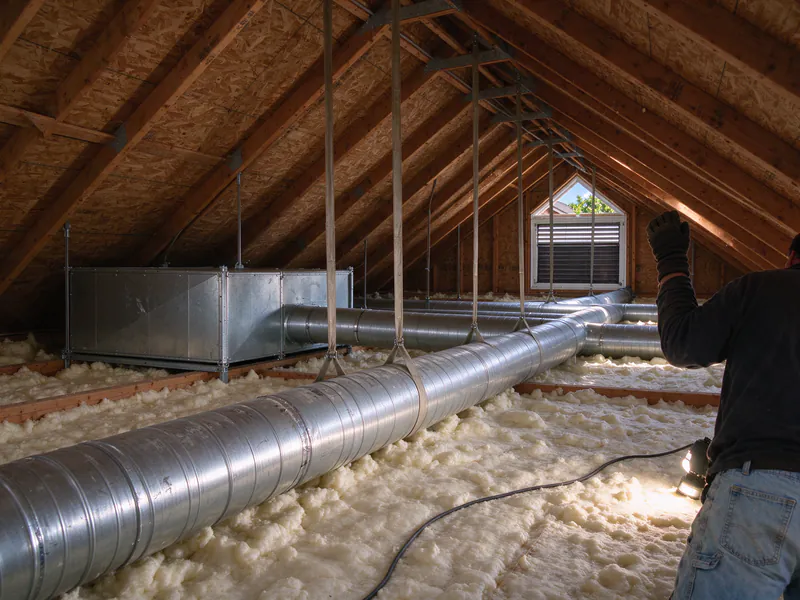
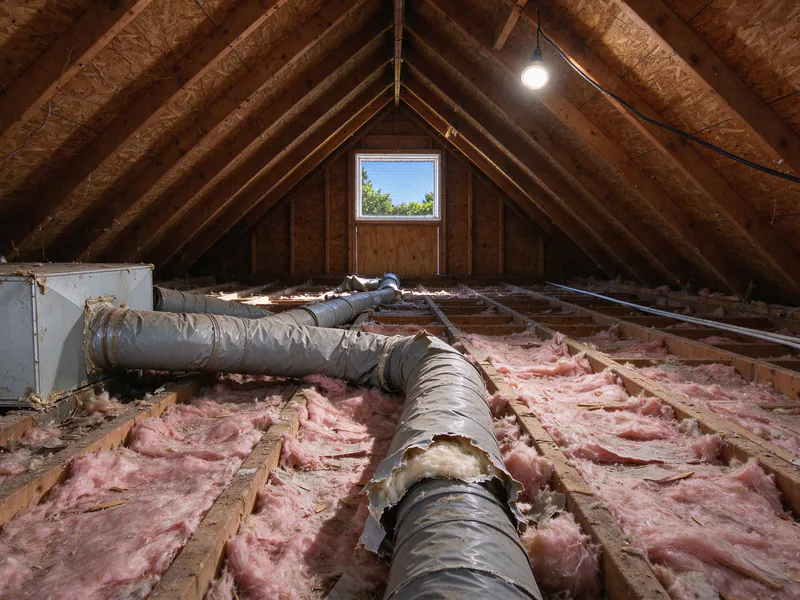
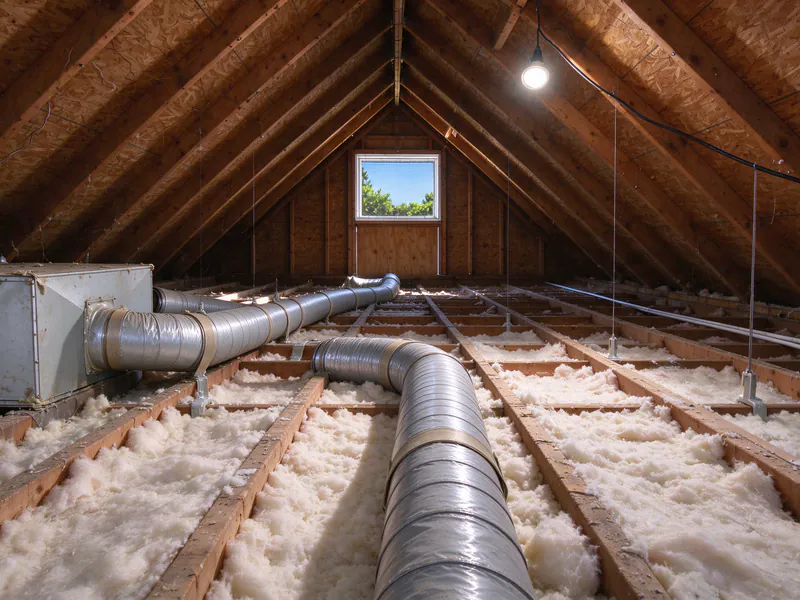
- The attic. Run lengths, crushed or sagging flex, disconnected boots, insulation level and any wrap that could contain asbestos.
- The return. How many returns there are, their size and whether bedroom doors cut them off.
- Access. Hatch size, headroom and attic temperature, which change how long the work takes.
The written scope separates sealing, repair and replacement, so you can see which numbers drove the recommendation.
Keep, repair or replace
Inside the City of Sacramento, the existing ducts usually stay. The City’s permit records for the twelve months ending October 25, 2026 list 1,950 permits for heat pumps; 176 of them added new ducts, while 1,167 carried the condition “No Duct Work Permitted”. The California Energy Commission’s 2019 survey found central air conditioning in 89% of SMUD households, so most Sacramento homes already have a duct system to work from.
When sealing is enough
If the ducts are the right size and in sound shape, sealing joints, boots and plenum connections brings leakage down to the Title 24 target. Homeowners report passing the test with original ducts. The test measures leakage, not the age or R-value of the duct.
When targeted repair fits
A single crushed trunk, a missing return or two rooms on long, undersized runs can be fixed without touching the rest. Adding or enlarging a return is often the change that brings static pressure down most.
When replacement is the right call
Replacement fits when the ducts fail throughout: brittle flex, runs that tear when moved, insulation well below R-8, or a layout that cannot carry the airflow without redesign. Older ranch houses deserve a careful look here. The Census Bureau’s survey counts about 70% of homes in Carmichael and North Highlands, and 77% in Arden-Arcade, as built before 1980, so original attic ducts are a realistic possibility, though each house has to be tested. The home readiness check walks through the duct questions before a visit.
Title 24 rules for the ducts
The state’s energy code treats a heat pump change-out as an alteration of an existing system, and the California Energy Commission’s 2025 single-family compliance manual spells out what that means for ducts.
Existing ducts kept in service
Swapping the outdoor unit, the air handler, a coil or a packaged unit puts the attached ducts in scope. The installer seals them, and an ECC-Rater measures the result. Passing means leakage of no more than 10% of system airflow in total, or no more than 7% to outdoors. Ducts that can’t get there still pass once all reachable leaks are closed and the rater confirms it by eye and with smoke.
What is exempt
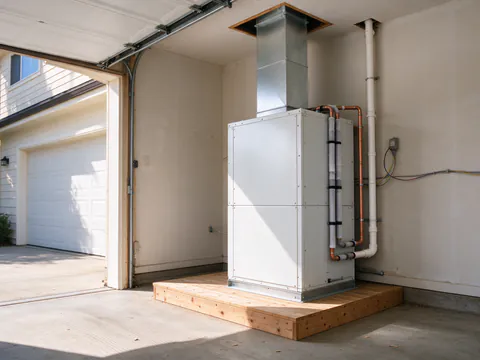
Three cases skip the leakage test: a duct system with a prior ECC test on record, one with under 40 feet of duct, and ducts wrapped in asbestos insulation. A garage location is stricter, at 6% unless the leaks into the garage are sealed.
New duct
Adding over 25 feet of new duct brings two requirements: R-8 insulation in Sacramento-area climate zones and a leakage test. A fully new system has a tighter limit of 5% leakage and must also meet filtration, fan efficacy and airflow rules. The permit and Title 24 guide covers the paperwork, and City of Sacramento permit records list new ducts as their own “Change-out w/new ducts” option.
Designing replacement ducts
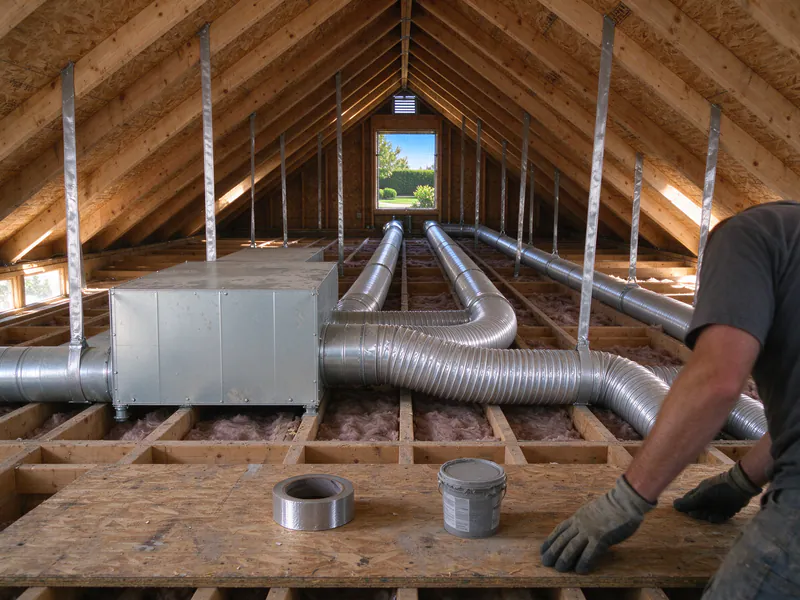
Replacement ducts are laid out with ACCA Manual D, the residential duct design method, working from the room loads.
What the design sets
- Trunk and branch sizes that carry the heat pump’s full airflow at a static pressure the blower can handle.
- Returns large enough for the blower, with a path back from bedrooms when doors are closed.
- Short, straight runs with gentle bends, supported so flex duct stays round.
- Register type and placement so cooler supply air reaches the far side of the room.
Ceiling registers and heating
Where the ducts run through the attic, the supply registers sit in the ceiling. Heat pump supply air mixes well when the register throws it across the room, so the register choice matters more than the ceiling location.
Ducted or ductless
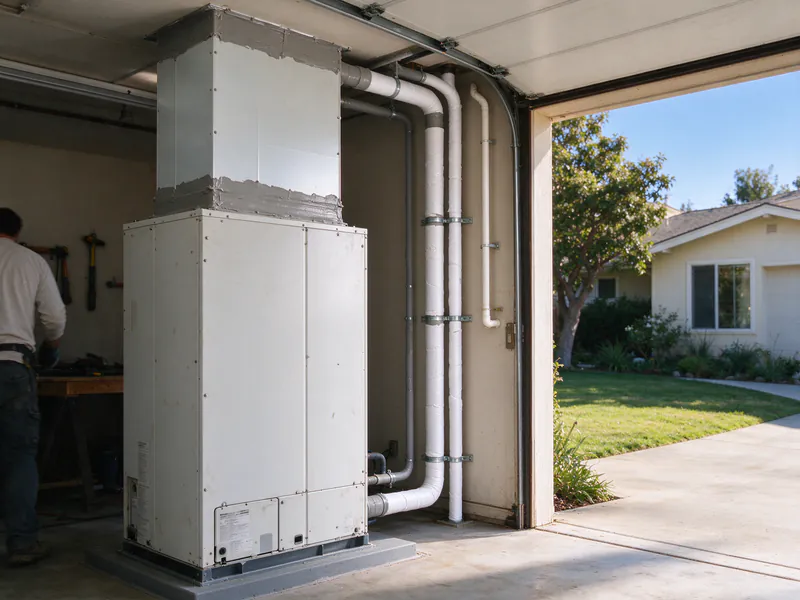
If a house has rooms the ducts can’t reach, ducted design is the scope here. Ductless mini splits are a separate trade not offered through this site, and a variable speed heat pump on well-designed ducts is the closest ducted answer to uneven rooms; the ducted vs ductless guide explains the tradeoffs.
Rebates and what duct work costs
SMUD ties its heat pump rebate to the duct work. The program pays $3,000 on a qualifying variable-stage system and $2,000 on a two-stage system when either replaces gas heat, and both need a passing Title 24 verification plus R-8 insulation on any new ducts. The installer must be a participating contractor in the SMUD Contractor Network. Rebate-qualified installs can be arranged on request, with eligibility checked for each project under SMUD’s terms; the SMUD rebate guide lists the rest.
Typical ranges
A Sacramento-area gas furnace to heat pump conversion that also replaces the ducts typically lands between about $20,000 and $31,000 before rebates. Duct length, attic access and whether returns are enlarged drive the difference. Treat it as a budgeting range for the whole project rather than a quote.
Sealing and repairs
Sealing or targeted repair on its own has no reliable published local range. Its price follows the measured leakage, the number of runs, attic access and the method used. The gas furnace to heat pump conversion page shows where duct work fits in a full project, and the page on heat pumps in older homes deals with houses that need a duct system built from scratch. If the indoor cabinet is changing too, see air handler replacement.