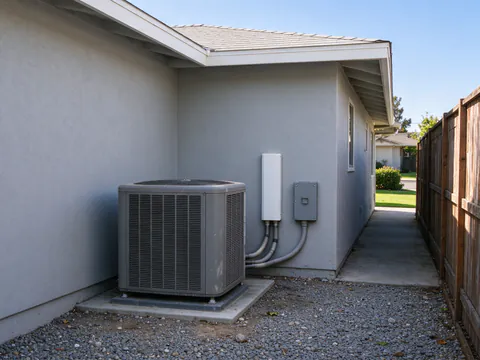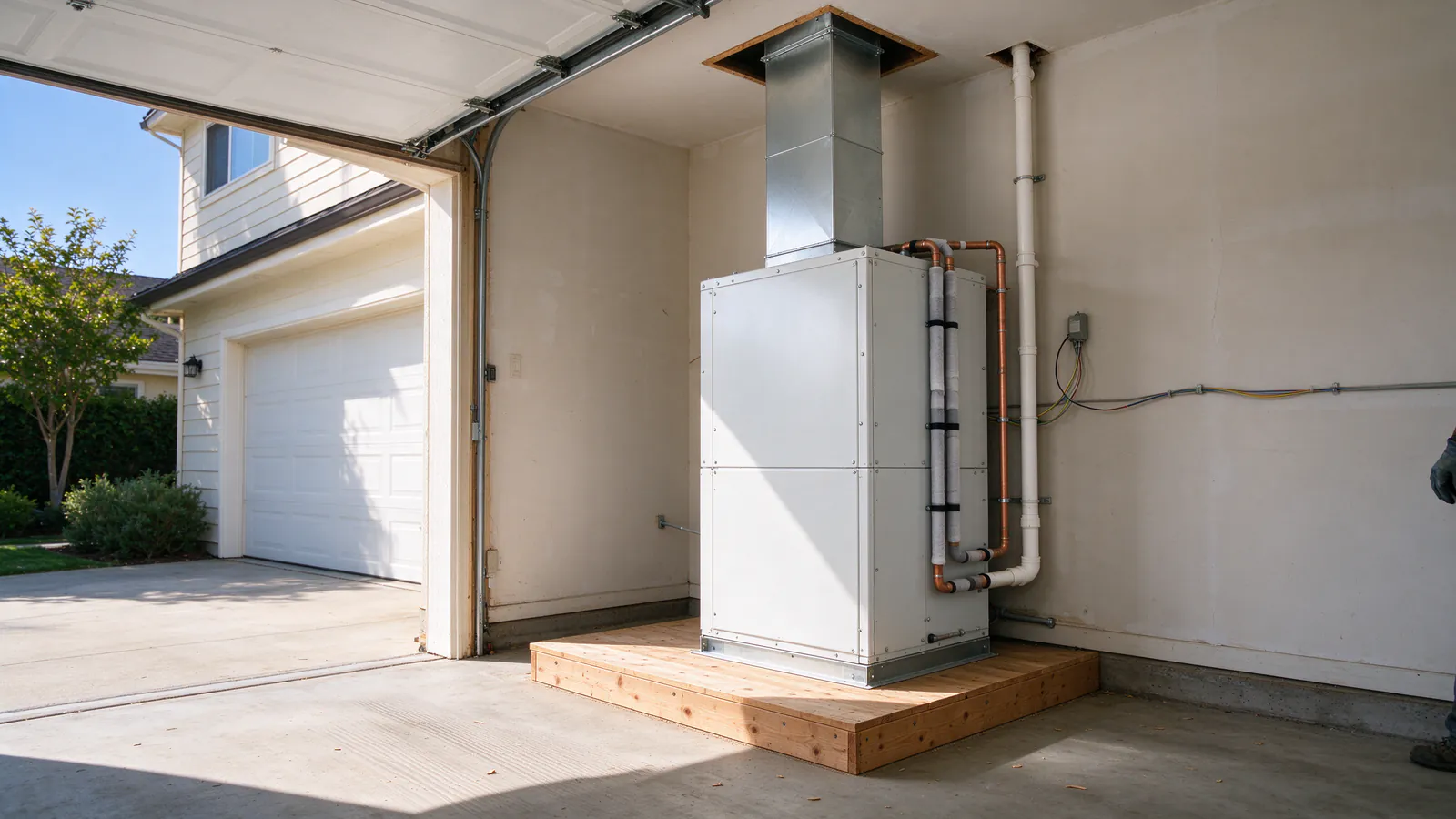
Tule Sacramento Heat Pump replaces heat pump air handlers, and the furnace cabinets that act as air handlers, across Sacramento County, south Placer County, east Yolo County and El Dorado Hills. Licensed and insured contractors carry out the work. The air handler is the indoor half of a split heat pump: a blower, a refrigerant coil, the controls and usually a set of backup heat strips in one cabinet, sitting in an attic, a garage or a hall closet.
When the indoor unit is the part that needs replacing
An air handler is replaced for one of three reasons. The blower motor or control board has failed on an older cabinet. The coil inside it is leaking refrigerant. Or the outdoor unit is being replaced and the old indoor unit cannot be paired with it.
The third case is the most common decision point, and it is covered under heat pump replacement, where both halves change together. This page is for the cases where the indoor unit is the question: a failed cabinet with a healthy outdoor unit, a conversion where the furnace becomes an air handler, or a cabinet that has to move.
What happens on the first visit
The visit decides whether the indoor unit alone is a sound repair or a stopgap.
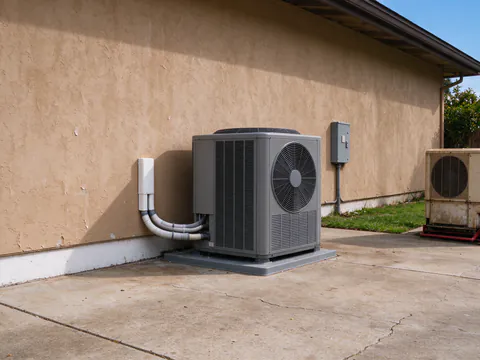
- Both model plates. The outdoor unit’s age, refrigerant and model, and the indoor unit’s, so the rated match can be checked before anything is chosen.
- The failure. Whether the problem is the blower, the board, the coil or the drain, because a leaking coil and a dead motor lead to different scopes.
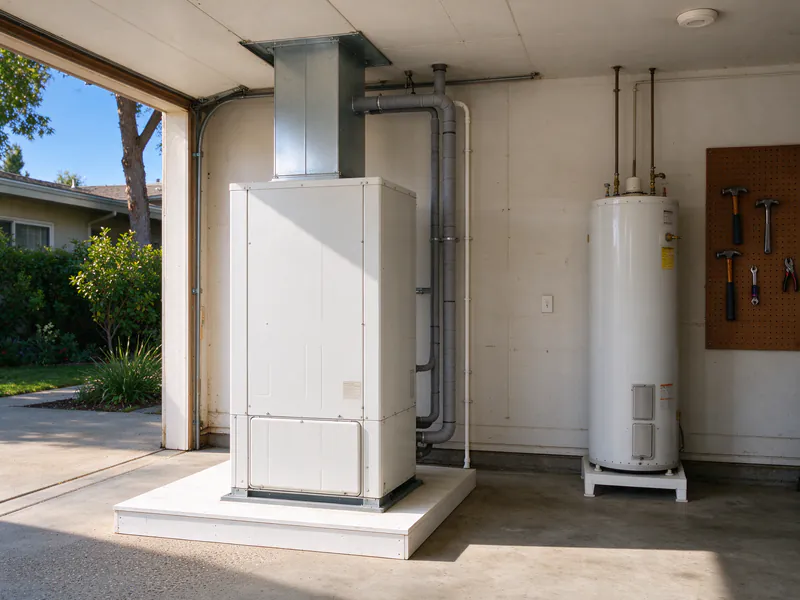
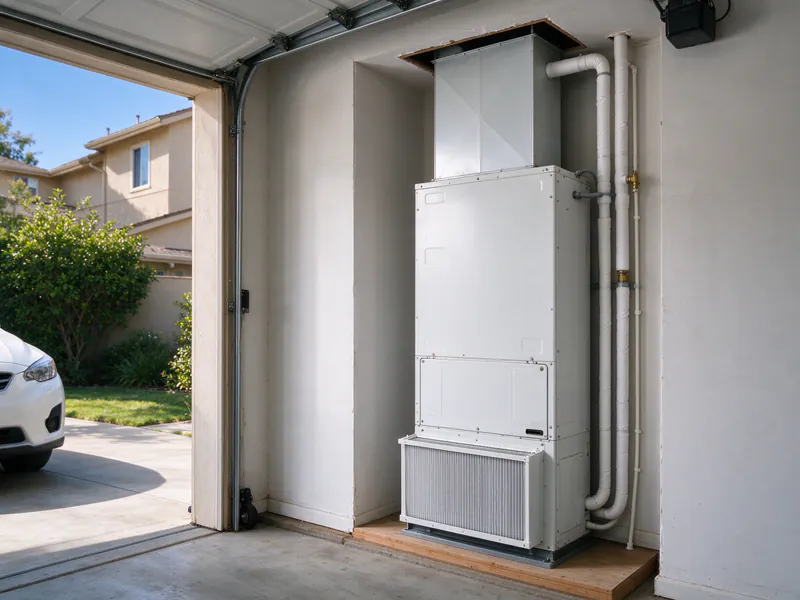
- The location. Attic, garage or closet; the access path, the platform, the clearances around the cabinet and how the old one comes out.
- The drain. Where the condensate runs today, whether it has a trap and whether an attic unit has a secondary pan or overflow switch.
- The ducts and filter. Return size, the filter rack, a static pressure reading and any record of an earlier ECC-Rater test.
- The circuit. The breaker and wire feeding the backup heat strips, since a different strip size can change both.
The scope comes back in writing, with a straight answer on whether replacing the indoor unit alone makes sense for the outdoor unit you have.
Matching the cabinet to the outdoor unit
A split heat pump is rated as a pair. The efficiency and capacity on the label assume a specific indoor coil, metering device and blower working with a specific outdoor unit, a combination certified in the AHRI directory. Put an unmatched coil behind a good outdoor unit and the system can run, but the charge, airflow and capacity drift away from what was tested.
Questions the match settles
- Refrigerant. Newer equipment uses lower-impact refrigerants such as R-454B. An older outdoor unit on R-410A cannot simply connect to a cabinet built for the newer refrigerant. The R-454B guide covers what the change means.
- Capacity. A variable-speed air handler rated for four tons does not automatically suit any four-ton outdoor unit. The matched rating decides.
- Controls. Some variable-speed systems talk to their own thermostat; the controls must agree on how the blower and strips stage.
When the indoor unit alone is the wrong fix
If the outdoor unit is old, on an older refrigerant, or the coil failure points to a system-wide problem, a new indoor unit ties fresh equipment to a part with little life left. In that case the honest scope is both halves, and variable-speed equipment is worth pricing as part of it.
Where the air handler sits, and why it matters
Sacramento-area homes put the indoor unit in one of three places, and each changes the work.
Attic
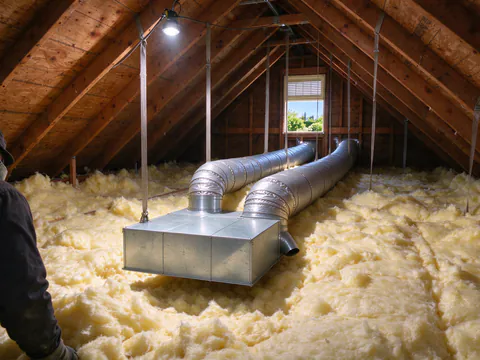
Attic cabinets save floor space but work in summer attic heat. Replacement means a service platform, a safe path from the hatch and a drain that cannot fail into the ceiling. Homeowners report water stains appearing a few weeks after an attic install when the drain was pitched wrong. A secondary pan, an overflow shutoff switch or both are the protection.
Garage
A garage location is the easiest to service. Title 24 holds equipment and ducts in a garage to a tighter leakage target, 6% or less, or the garage leaks sealed, because leaks there can pull garage air into the house.
Hall closet
A closet keeps the cabinet inside the conditioned space but limits its size and the return. Upright air handlers often fit where a furnace stood, though the return opening and filter location may need rework.
Moving the cabinet
Relocation is its own scope. The City of Sacramento’s standard heat pump change-out permit is written for a unit placed in the same location, and Roseville’s checklist asks for stamped plans when a new mechanical unit goes in the attic. The permit and Title 24 guide covers each office.
Backup heat, the circuit and the controls
Most heat pump air handlers carry electric resistance strips. In Sacramento they are a supporting part, not the heater. The California Energy Commission’s design data puts the heating design temperature around 31 degrees at Sacramento’s airport station and 35 degrees downtown, so a heat pump sized for summer usually covers the winter load on its own.
What the strips are for
The strips temper the air during defrost on foggy, near-freezing mornings and help on the rare hard frost. Title 24 does not allow electric resistance as the primary heat in a replacement system unless an exception applies, so the strips are staged behind the heat pump with an outdoor lockout where the controls allow.
Why strip size matters
An oversized strip kit raises the circuit size and can push an older panel toward an upgrade for heat it rarely uses. The kit is sized from the load calculation and the panel review. The aux heat and defrost guide explains how staging should look on the thermostat.
The thermostat
Title 24 requires a digital setback thermostat when refrigerant components are replaced, and the thermostat must know which stage is the heat pump and which is backup.
The duct test and the filter
Why the duct test applies
A new indoor unit triggers the same Title 24 alteration rules as a full system. The California Energy Commission’s compliance manual requires the connected ducts to be sealed and verified by an ECC-Rater when an air handler is replaced or a coil installed, with a target of 10% or less total leakage, or 7% or less to the outside. Ducts already ECC-tested, systems with less than 40 feet of duct and ducts insulated with asbestos are excepted.
Airflow and filtration
The heat pump also needs its refrigerant charge verified with at least 300 cfm per ton of airflow. A replacement is the right moment to size the filter rack: a deep media filter loads the blower less than a thin, dense one, which matters in smoke season. The wildfire smoke guide covers filter choices, and heat pump ductwork covers what happens when the ducts fail the test.
What an air handler replacement costs
There is no reliable published local range for replacing an air handler on its own, so no figure is given here. The price moves with a few drivers:
- Location and access. An attic swap through a small hatch takes longer than a garage swap.
- Strip heat and the circuit. A larger kit can mean new wire or a new breaker.
- The match. If the outdoor unit must change too, the job becomes a system replacement.
- Refrigerant. An indoor unit for a newer refrigerant may need a new line set or a cleaned and verified one.
- Plenum and return work. A different cabinet size means new transitions.
SMUD’s heat pump rebate is written for qualifying heat pump systems, not an indoor unit alone. When both units change, the heat pump installation cost guide gives the published ranges. When a furnace is being retired, the gas furnace to heat pump conversion page shows how the air handler fits into that project.