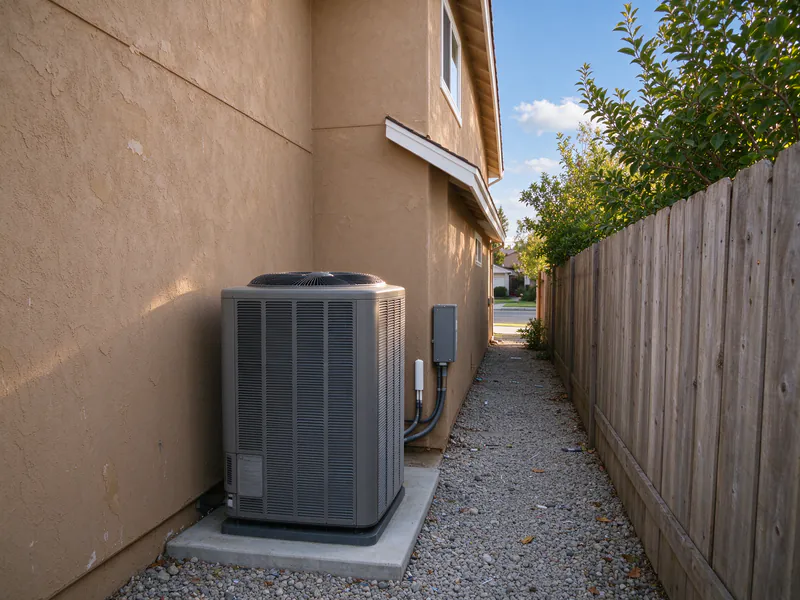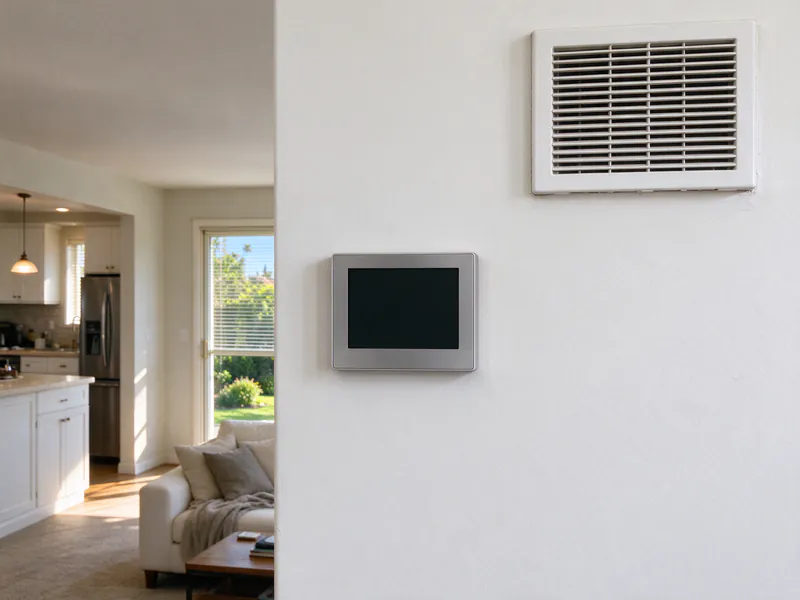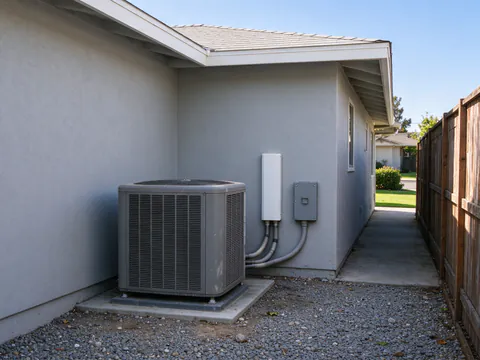
Tule Sacramento Heat Pump installs variable speed heat pumps, also sold as inverter heat pumps, in homes from Sacramento and its county suburbs to Roseville, Rocklin, Davis, West Sacramento and El Dorado Hills. Licensed and insured contractors install and commission them. A variable-speed heat pump changes its compressor speed to match the house, running slowly on a mild morning and ramping up on a 104-degree afternoon, instead of switching between full output and off.
How a variable-speed heat pump works
A conventional single-stage heat pump has one speed. It starts, runs at full capacity until the thermostat is satisfied, and stops. A two-stage unit adds a lower setting. A variable-speed unit uses an inverter drive to run its compressor at any speed across a wide range, paired with a variable-speed blower in the air handler.
Capacity that follows the load
Most hours of the year the house needs a fraction of the system’s full capacity. A single-stage unit meets that by cycling on and off. A variable-speed unit meets it by slowing down. Longer, slower running avoids start-up losses, keeps room temperatures from swinging and lowers fan and compressor noise.
Where the efficiency comes from
A heat exchanger working at part load has more surface for less heat, so it moves heat with less electricity. That shows up in higher SEER2 and HSPF2 ratings on variable-speed equipment. Ratings are lab results; the house, the ducts and the installation decide how much of it you see.
Why Sacramento’s climate suits modulation
Sacramento’s summers have a very wide spread between the hottest and the ordinary days. For the airport station, state design data puts the 2% cooling point at 94 degrees and the 0.1% point at 104, and a typical summer day swings 35 degrees from morning low to afternoon high.
Long mild seasons, short extremes
By NOAA’s 1991-2020 normals, the airport averages roughly 76 days of 90 degrees or more and 14 days of 100 or more each year. The rest of the cooling season, and most of the heating season, is part-load weather. A heat pump sized for 98 degrees spends most of its life well below full output, which is where a variable-speed unit is most efficient and a single-stage unit cycles most.
Dry heat changes the argument
In humid climates, variable-speed equipment is often sold on dehumidification. Sacramento’s summer is dry: NOAA’s hourly normals show an afternoon dew point near 53 degrees in July, so the cooling load is mostly temperature, not moisture. Here the case rests on comfort, efficiency and noise. How the equipment holds up at 104 degrees is the subject of the hot weather guide.
Foggy winter mornings
On near-freezing, saturated mornings in tule fog season, the outdoor coil frosts and the system defrosts. A variable-speed unit can hold a steady output between defrosts, which can reduce how often backup heat strips step in. That is a possibility, not a promise; controls and setup matter as much as the compressor, as the aux heat and defrost guide explains.
What happens on the first visit
The visit is about sizing and fit, because a variable-speed unit only earns its price if it is matched to the house and the ducts.
- The load. Manual J, run room by room for the local design afternoon, and a look at how the house behaves on ordinary days.
- Who sells you electricity. Rates and rebates change the value of each stage, and they differ between SMUD, PG&E and Roseville Electric.
- The ducts. A leakage test and static pressure reading at full airflow, plus the return size.
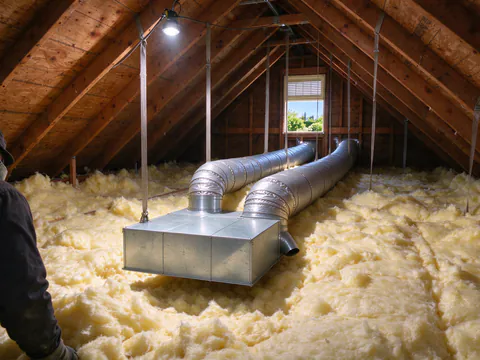
- The air handler location. Attic, garage or closet, and the drain and filter setup.
- The controls. Your thermostat, its wiring, and whether the chosen equipment needs its own control.
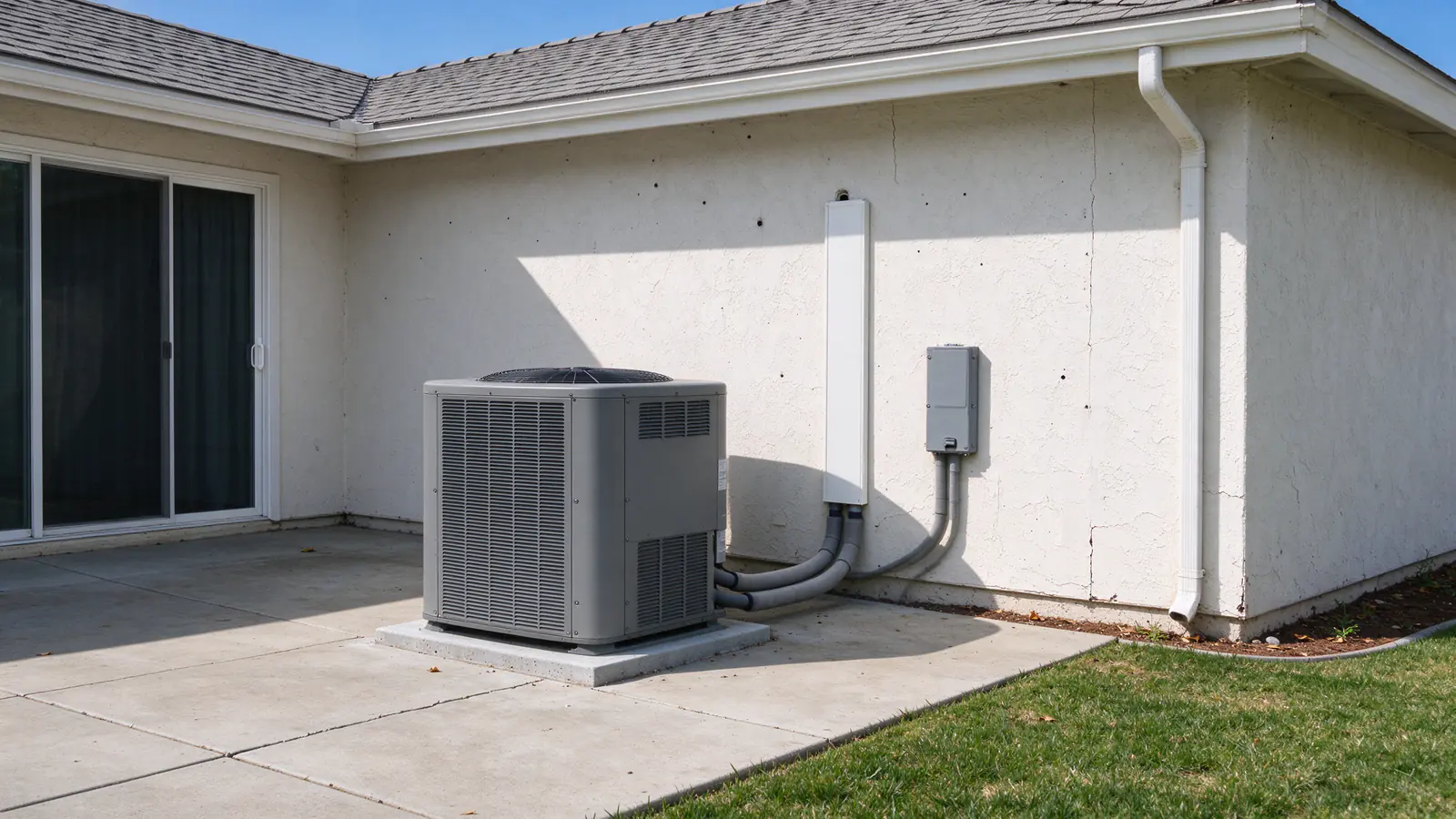
- The panel. Service size and the circuits for the outdoor unit and backup strips.
The written quote can price single-stage, two-stage and variable-speed options side by side, with the rebate tier shown against each.
SMUD’s rebate tiers by compressor type
SMUD’s heat pump rebate depends on the compressor. Single-stage systems are not eligible at all.
| What the heat pump replaces | Two-stage (15.2 SEER2 minimum) | Variable-stage |
|---|---|---|
| Gas heating | $2,000 | $3,000 |
| Electric heating or an older heat pump | $1,000 | $1,000 |
| Any system, single-stage equipment | Not eligible | Not eligible |
The conditions
Every tier needs an active SMUD account and a connected thermostat with Wi-Fi and seven-day scheduling. The job must be permitted and pass its Title 24 verification, any new ducts need R-8 insulation or better, and the qualifying equipment has to be installed by a participating contractor in the SMUD Contractor Network. Rebate-qualified installations are available on request, eligibility is confirmed per project under SMUD’s current terms, and the program runs subject to funding. The SMUD rebate guide has the details.
What the tiers mean
On a gas-to-electric conversion, variable-speed equipment earns $1,000 more than two-stage. On an electric-to-electric replacement the rebate is the same either way, so the choice turns on comfort and operating cost alone.
Rates, peaks and how a variable-speed unit fits them
SMUD
SMUD’s standard Time-of-Day rate charges $0.3765 per kWh from 5 to 8 p.m. on summer weekdays, against $0.2139 mid-peak and $0.1550 off-peak. A variable-speed unit can pre-cool the house steadily through the afternoon and coast through the peak at low speed. Winter rates are low enough, $0.1285 off-peak, that heating cost is rarely the deciding factor.
PG&E and Roseville Electric
On PG&E’s E-ELEC heat pump rate, a heat pump needs to deliver about 3.1 units of heat per unit of electricity at winter off-peak prices to beat a 95% gas furnace, a figure derived from PG&E’s tariffs. Efficiency matters more there, which strengthens the case for variable speed in West Sacramento, Davis or Rocklin. Roseville Electric bills in tiers rather than by time of day, so total annual kWh drives the cost. The electric bill guide shows how each rate plays out.
Ducts, controls and sizing still decide the result
Ducts at full speed
A variable-speed unit at top speed needs the same airflow per ton as any heat pump. Homeowners report being offered high-SEER variable-speed equipment on old ducts and wondering whether it will pay off. If the ducts can’t carry full-speed airflow, the system either runs noisy at the top or has its maximum speed capped. Test first; heat pump ductwork covers the fixes.
Controls
Many variable-speed systems reach their full range only with the manufacturer’s communicating thermostat. The control must also satisfy SMUD’s connected-thermostat rule, so both are chosen together. If only the indoor unit is failing, air handler replacement covers matching a variable-speed blower to the outdoor unit you keep.
Sizing
Variable speed widens the range a system can cover but does not excuse a wrong size. Title 24 limits how far a replacement heat pump may exceed the calculated loads unless airflow is verified at 350 cfm per ton, and the City of Sacramento’s standard change-out permit caps the new unit at 25% above the old one. The heat pump sizing guide explains the method.
What variable-speed installation costs
When a Sacramento-area home trades its gas furnace and central AC for a ducted heat pump, the middle half of recent projects falls between roughly $15,000 and $24,000 before rebates. Compressor speed is one of the cost factors SMUD lists inside that range, alongside system size, duct work, the air handler location and backup heat. No separate published local range isolates variable-speed equipment, so the side-by-side quote is the honest comparison.
Lining up the options
The quote comparison guide shows what to line up, and heat pump replacement and gas furnace to heat pump conversion cover the projects these systems usually go into.