
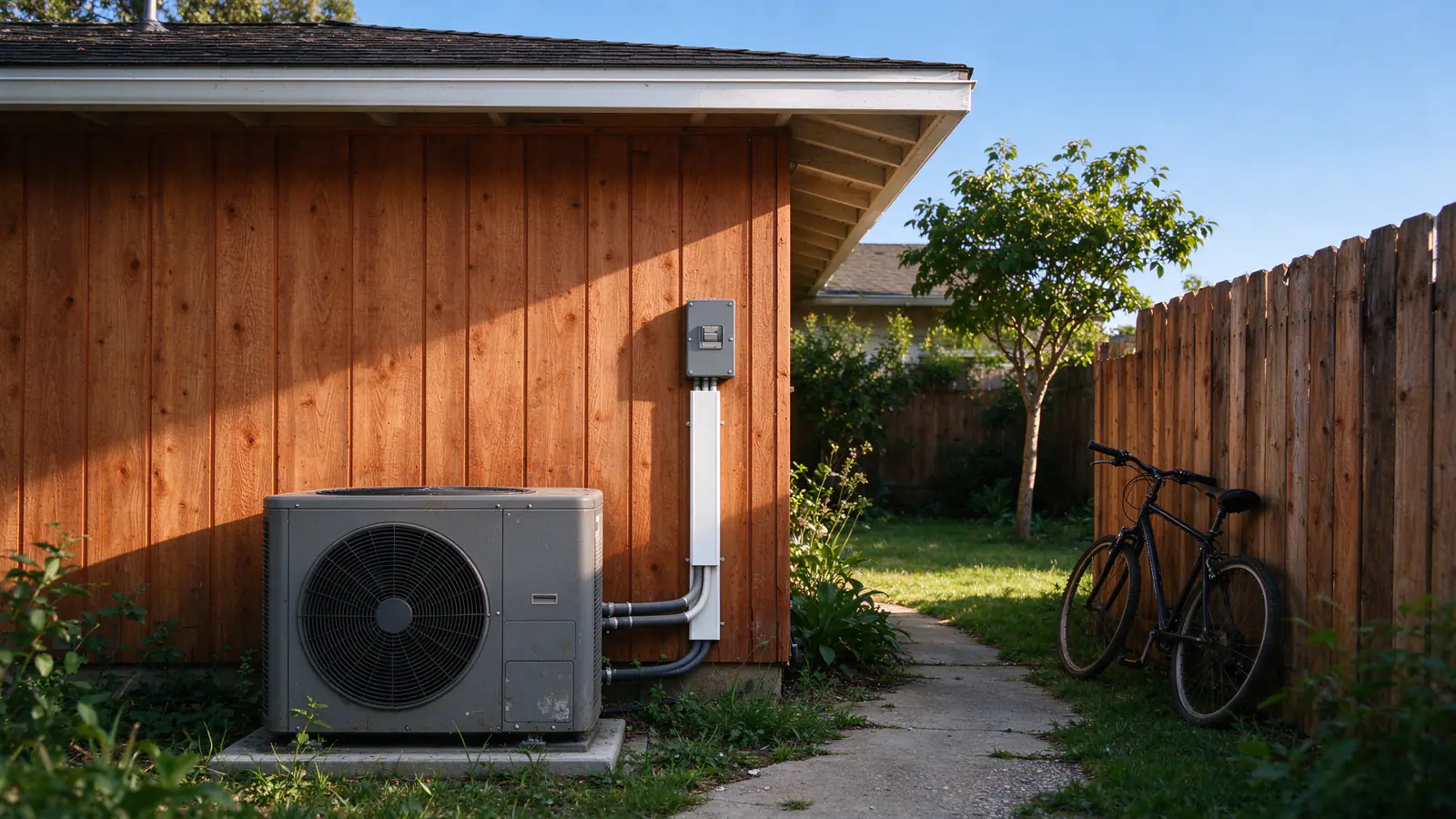
On a design-condition summer day in Davis, the gap between the afternoon high and the overnight low is 41°F, the widest daily swing among the Sacramento-area stations the Energy Commission lists. Add a city electrical worksheet that counts a heat pump at its full nameplate load, PG&E delivery with Valley Clean Energy generation, and a housing market where fewer than half of homes are owner-occupied, and Davis plans differently from its neighbors.
Tule Sacramento Heat Pump installs ducted heat pumps in Davis and Woodland, with the work carried out by licensed and insured contractors.
A 41-degree daily swing
The design numbers
The CEC’s design data for Davis lists 103°F at 0.1%, 99°F at 0.5% and 97°F at 1% for cooling, a 41°F daily range, and 30°F at 0.2% for heating. NOAA’s 1991 to 2020 normals for the Davis station count 87.7 days a year at or above 90°F and 17.7 nights at or below 32°F.
What the swing does to equipment
Sizing comes from the design afternoon, so the load calculation looks much like Sacramento’s. The swing matters for how the system runs. After the Delta breeze arrives in the evening, the cooling load drops fast, and a single-stage unit sized for 97°F cycles on and off through the night. A variable-speed heat pump slows down instead, which also helps on PG&E’s 4 to 9 p.m. summer peak. The sizing guide explains the method.
Winter mornings
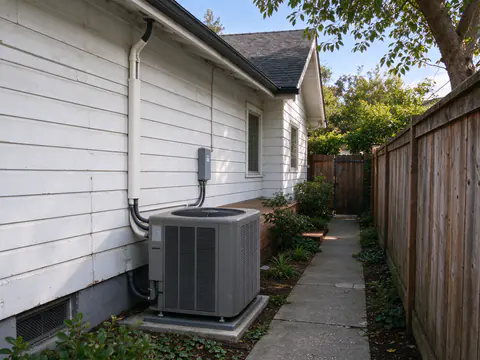
Near-freezing, damp mornings bring frequent defrost cycles. The outdoor unit sits on a raised pad where melt water drains away from the foundation, and the backup heat is set to engage only when the heat pump cannot keep up.
The City of Davis electrical load worksheet
Davis publishes a residential service-load worksheet that names heat pumps as their own line item. It sets out how new and existing loads are added up before the City accepts the electrical side of the job.
What the worksheet counts
- Heat pumps at 100% of their nameplate rating, listed separately for a first and second unit.
- Electric space heating, such as backup strips, at 65%.
- EV charging, as its own line.
- The general-load reduction from the electrical code’s optional calculation for dwellings.
- The existing service size in amps, signed by the electrical contractor.
When the numbers come out tight
On an older 100- or 125-amp service, a heat pump with backup strips plus an EV charger can push the calculated load past what the service carries. The options then are a smaller backup heat stage, a load-management device where the inspector accepts one, or a service upgrade. A standard 100- to 200-amp upgrade typically runs $1,500 to $4,500 for Sacramento-area homes. The electrical panel guide compares the choices.
Owners, landlords and shared walls
Census figures show 43.5% of Davis homes as owner-occupied, 43.3% in buildings of two or more units, and 44.8% built before 1980. Those are citywide shares, not a finding about any house.
- Owner of a rental house. The owner approves the scope and the rate plan, and the install day is planned with the people living there.
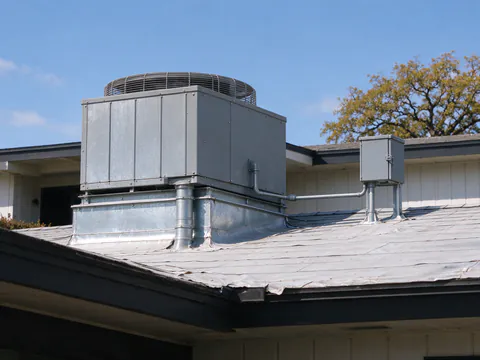
- Condo or townhome. Roof access, the outdoor unit location and HOA rules are confirmed per building. Where a unit has a rooftop package system, a package heat pump replacement covers it.
- Pre-1980 single-family house. Original ducts and service get tested first. Heat pumps for older homes explains that sequence.
Valley Clean Energy and PG&E
The Energy Commission’s utility layers place Davis and Woodland in PG&E’s delivery territory with Valley Clean Energy as the generation provider, and PG&E supplies gas. PG&E’s E-ELEC plan, open to homes using an electric heat pump as primary heating and cooling, lists winter prices of $0.28468 per kWh off-peak and $0.32063 at peak as bundled rates.
Against PG&E’s gas baseline of about $2.54 per therm, a heat pump needs a COP of about 3.1 to 3.5 to match a 95% furnace on winter fuel cost, a figure derived from the two tariffs.
Checking the Valley Clean Energy portion
For a Valley Clean Energy customer, the generation portion of the bill follows its own rates, so totals are checked against a recent bill. Winter heating savings over gas are thin on these prices; the case usually rests on replacing an aging AC and the furnace in one project. The electric bill guide compares the rate plans.
Woodland
Woodland, north of Davis on SR-113, shares the utility pairing of PG&E and Valley Clean Energy and Title 24 climate zone 12, but runs hotter. Its 1% cooling design is 100°F, with 106°F at 0.1%, and NOAA normals count 95.5 days at or above 90°F and 20.6 at or above 100°F. Its heating design is 30°F at 0.2%, the same as Davis.
Census figures show 48.1% of Woodland homes built before 1980 and 18.5% before 1960. Where an older house has original ducts, the Title 24 leakage test and the 300 cfm per ton airflow check set the duct scope. Woodland issues its own permits, and its HVAC rules are confirmed per address and project.
Permits in Davis
The City of Davis Building Division handles permits inside city limits. Beyond the load worksheet, its HVAC submittal details are confirmed per address and project. The state steps apply everywhere: a permit for the space-conditioning appliance, duct sealing and testing on the change-out, and refrigerant charge verification by an ECC-Rater. The permit and Title 24 guide covers each step.
How a Davis install is sequenced
- Who decides. Owner or landlord, single-family or shared building, and the PG&E and Valley Clean Energy bill.
- Load calculation and ducts. The heating and cooling load, a duct inspection and static pressure readings.
- Electrical worksheet. The service size, existing loads and any EV charger, run through the City’s form.
- Scope, permit and install. An itemized scope, the permit, refrigerant recovery, new equipment, lines pressure-tested and evacuated.
- Verification. Airflow, charge and the ECC-Rater visit.
For a gas furnace and AC, the starting point is a gas furnace to heat pump conversion. The Sacramento cost guide explains what moves the price.