
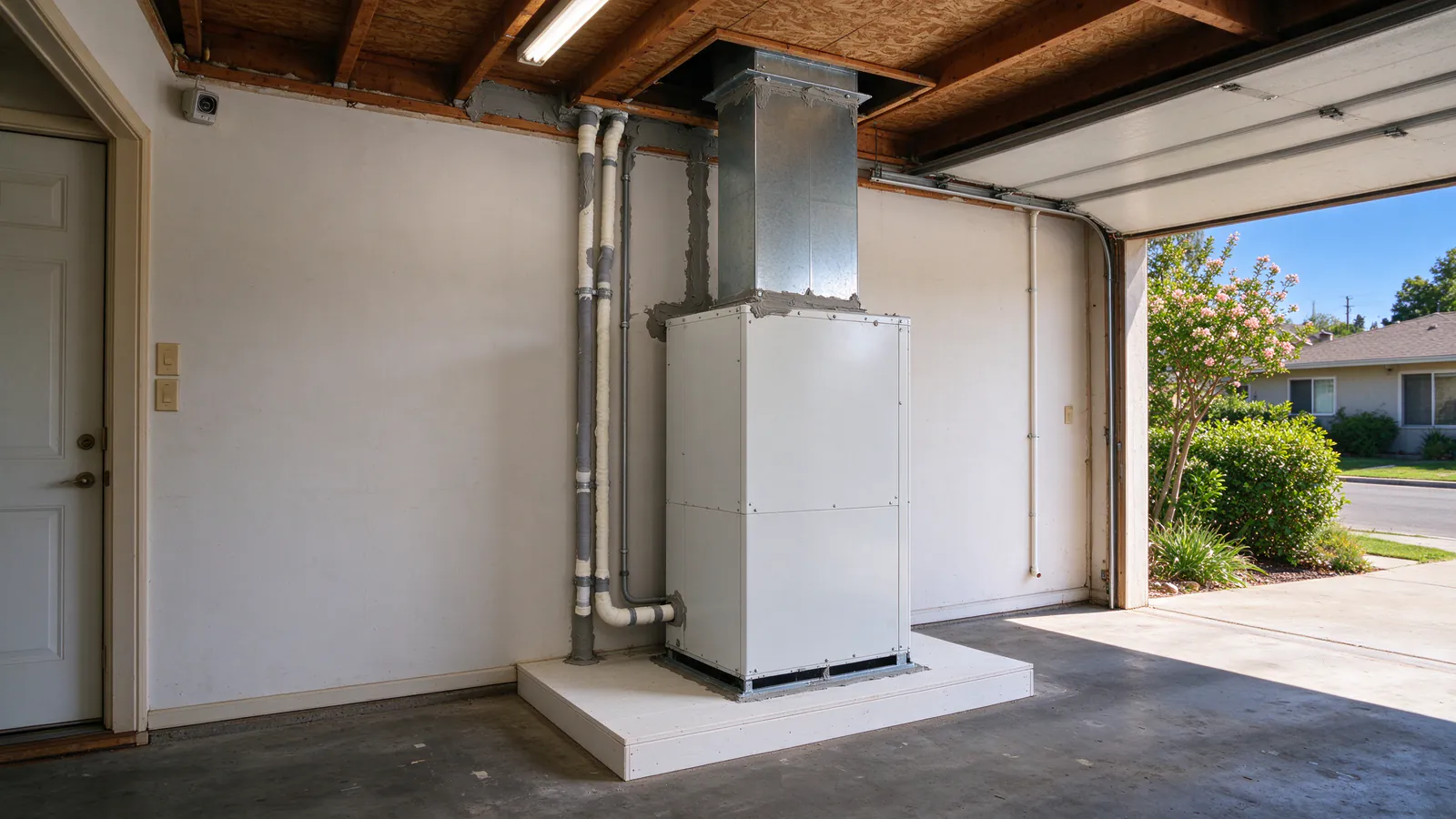
California’s SB 222 (Chapter 738, Statutes of 2026) sets a timetable for how cities and counties handle permits for residential heat pumps. It does not remove the permit, and it does not change the Title 24 testing, but it limits how many permits a jurisdiction can require, caps what one can charge, and pushes inspections and permitting online. The dates fall between mid-2027 and mid-2028.
Tule Sacramento Heat Pump plans ducted heat pump installations and gas furnace to heat pump conversions across the Sacramento region, with the work carried out by licensed and insured contractors. This post covers what the law says and what it changes for a project here.
The dates in SB 222
| Date | What the law requires |
|---|---|
| July 1, 2027 | Cities and counties must offer asynchronous inspections for residential heat pump installations |
| On or before January 1, 2028 | A jurisdiction may require up to one nondiscretionary permit per residential heat pump HVAC or heat pump water heater installation |
| July 1, 2028 | Online, automated, real-time permitting for licensed contractors |
Asynchronous inspections
An asynchronous inspection does not need the inspector and the homeowner in the house at the same time. How each office runs it is up to the office, but the point is scheduling: the inspection no longer depends on someone waiting at home for a set window.
One nondiscretionary permit
A nondiscretionary permit is one the office issues when the application meets the rules, without a judgment call or a hearing. Limiting a heat pump installation to one such permit is meant to keep a single job from needing several separate permits.
Online automated permitting
By July 1, 2028, licensed contractors must be able to get the permit online in real time. The contractor certifies a load calculation under penalty of perjury as part of the application, which puts the sizing on the record.
The $200 fee cap
The law caps the permit fee for a residential heat pump HVAC system at $200, and at $150 for a heat pump water heater, unless the city or county adopts written findings that justify a higher fee. The bill text gives the cap no separate start date of its own, so ask the permit office whether it applies to your permit yet. The cost guide shows how permit fees fit into a total price.
What counts as a swapout
SB 222 defines a swapout as a replacement in the same location that does not need more than 25 linear feet of new ductwork and does not switch between a package unit and a split system. The law does not apply to new construction.
That definition is close to the City of Sacramento’s existing web change-out permit, which keeps the new unit in the old spot and within 25% of the old size. A project that moves the outdoor unit, rebuilds the ducts or changes system type is more likely to need the regular route.
HOA rules that block electrification
SB 222 adds Civil Code section 4737, which makes HOA rules that prevent replacing gas equipment with electric equipment void. It sits alongside the state rules described in the gas furnace rules guide. An association can still have rules about where outdoor equipment sits or how it is screened, so the placement guide is worth reading before the location is fixed.
Who the law covers
Some sections carve out small jurisdictions: cities under 5,000 people and counties under 150,000. The larger cities and all of the counties around Sacramento are above those limits. Until the deadlines arrive, the local process stays as it is:
- City of Sacramento: an online minor permit for one- and two-family homes.
- Sacramento County (Carmichael, Fair Oaks, Arden-Arcade and other unincorporated areas): applied for online and issued automatically once paid.
- Citrus Heights: submitted and processed online only.
- Roseville: a pre-application in the City’s portal with the CF1R-ALT form, and stamped plans if the new unit goes in the attic or on the roof.
- El Dorado County (El Dorado Hills): an email permit program for licensed contractors with a County business license.
The permit and Title 24 guide covers each office in more detail.
Asking for the SMUD rebate on your quote
The permit changes do not touch the SMUD rebate rules. If you are a SMUD customer, the rebate depends on how the job is written up, so ask for these on the quote:
- A participating contractor. The rebate requires qualifying equipment installed by a participating contractor in the SMUD Contractor Network, and that contractor submits the claim. Rebate-qualified installations are available on request.
- Qualifying equipment. Two-stage or variable-stage, at least 15.2 SEER2. Single-stage systems are not eligible.
- The upfront option. SMUD allows the participating contractor to offer the rebate upfront as a discount. The quote should say whether it does.
- The CF3R. The system must pass Title 24 verification, documented on the CF3R form the ECC-Rater registers. Make sure the rater’s visit is in the scope.
- The thermostat. A Wi-Fi seven-day programmable connected thermostat is a rebate requirement, so it belongs on the equipment list.
- Panel and circuits. SMUD offers additional rebates for panel and circuit work on gas-to-electric projects. If the job includes electrical work, ask whether it qualifies; the electrical panel guide explains when a panel becomes part of the job.
Amounts and eligibility follow SMUD’s program rules and funding, so treat any figure as confirmed per project. The SMUD rebate guide covers the amounts, and the quote comparison guide shows what else a complete quote should list.