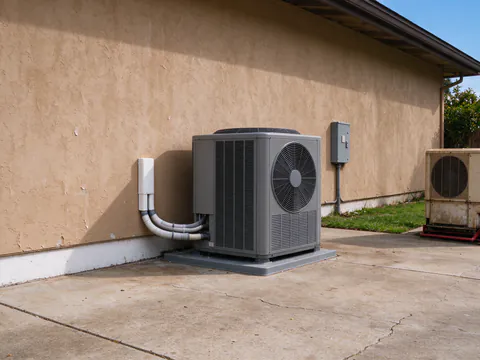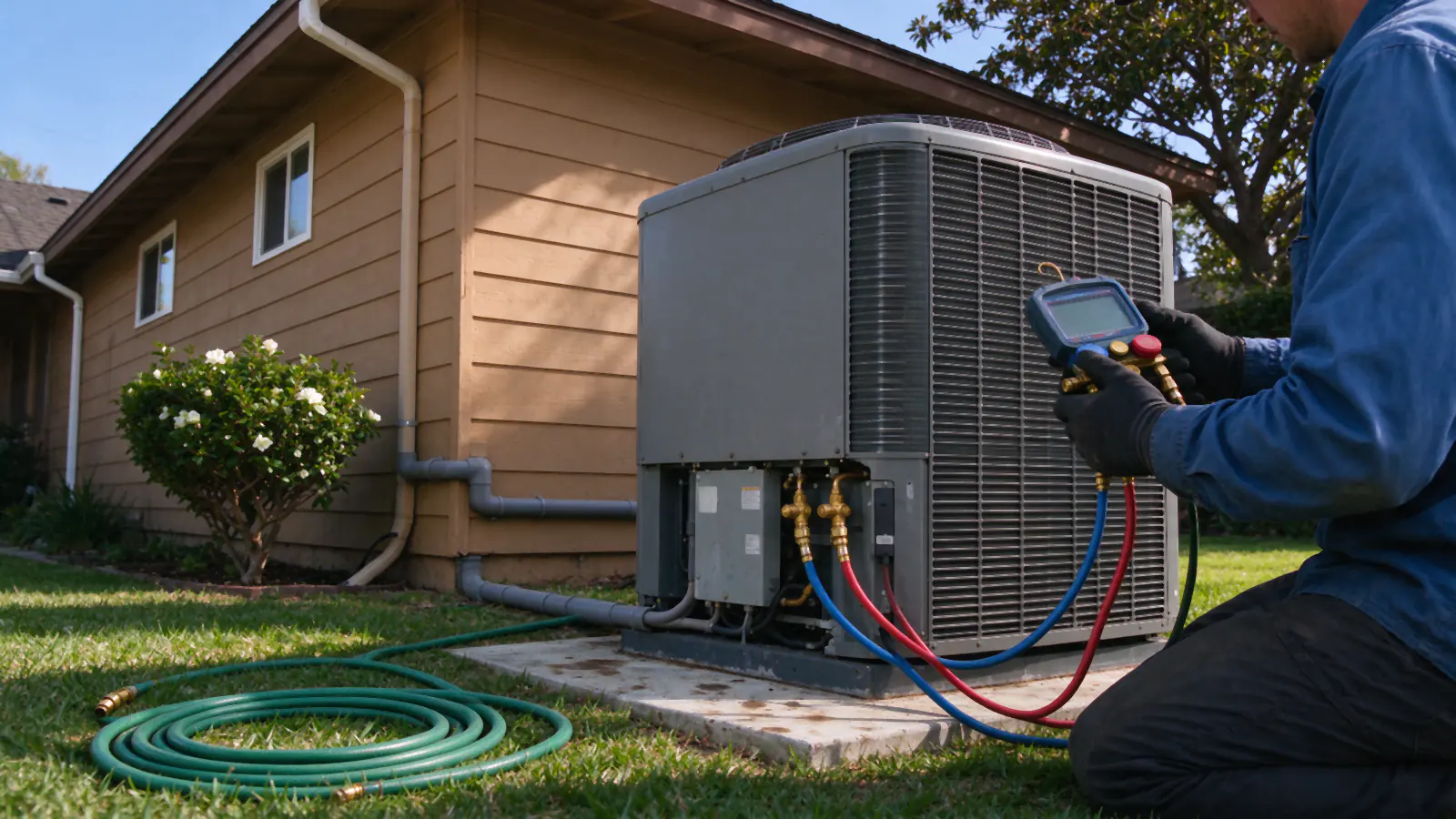
Tule Sacramento Heat Pump arranges heat pump maintenance across Sacramento County, south Placer County, east Yolo County and El Dorado Hills, carried out by licensed and insured contractors. The visits cover ducted air-source heat pumps, split or package, and focus on the parts that wear in this valley: filters loaded by smoke, coils fouled by dust and leaves, condensate drains in hot attics and the defrost system that fog season depends on.
Why one machine needs a check before each season
A heat pump works both halves of the year. NOAA’s 1991-2020 normals for Sacramento Executive Airport show about 76 days a year at 90°F or hotter, and about 15 nights at or below freezing. The cooling season loads the compressor and the outdoor fan for hours each afternoon; the winter adds defrost cycles and backup heat to the list.
The pattern that fits
A spring visit checks the system for cooling before the first heat wave. A fall visit checks heating, defrost and backup heat before the damp, foggy mornings begin. Waiting until a system fails in July or January means the repair happens under pressure, in the hottest or coldest week of the year.
What happens on a maintenance visit
Each visit follows the same core checks, then adds the season’s own.
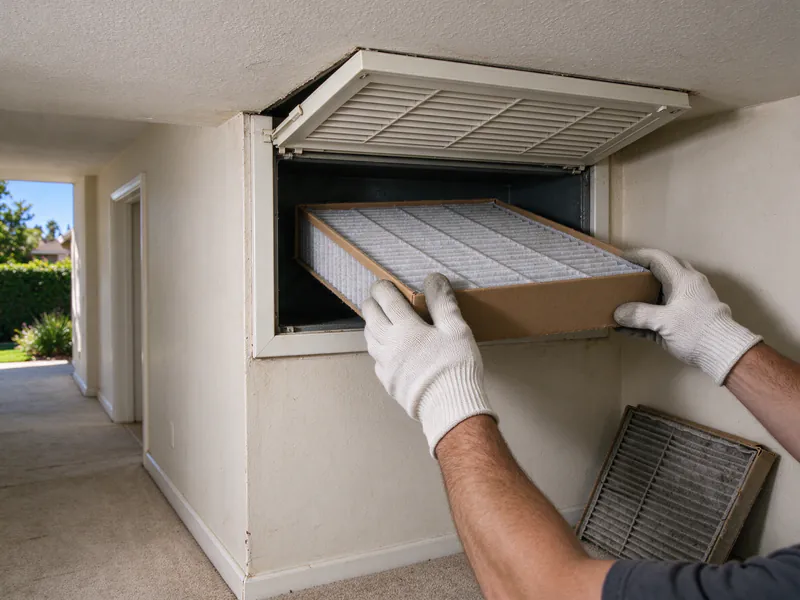
- Filter and airflow. Filter condition, size and fit, plus a static pressure reading that shows whether air is moving freely through the filter, the coil and the ducts.
- Coils. The outdoor coil inspected and rinsed, and the indoor coil looked at where the cabinet allows.
- Condensate. The drain flushed, the trap checked and the overflow switch tripped to confirm it shuts the system down.
- Electrical. Capacitor, contactor, connections and motor draw.
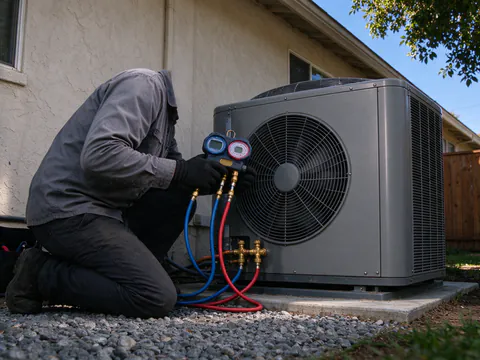
- Refrigerant readings. Temperatures and pressures in cooling or heating, compared with the manufacturer’s data.
- Controls. Thermostat schedule, heat pump settings and the aux heat lockout.
Anything that needs a part is written up and priced before it is done, so the visit and the repair stay separate decisions.
Filters, airflow and wildfire smoke
Why the filter matters more on a heat pump
A heat pump needs more airflow than a gas furnace heating the same house, and its supply air is cooler, so it is less forgiving of a restriction. Title 24 verifies at least 300 cfm per ton when a heat pump’s refrigerant charge is checked at installation. A clogged or overly dense filter can drop airflow below what the system was set up for, which costs capacity in both seasons and can ice the indoor coil in summer.
Smoke days
When wildfire smoke drifts into the valley, a ducted heat pump recirculates indoor air through its filter rather than drawing outdoor air in. Running the fan continuously moves more air through the filter, and the filter loads quickly, so it is checked more often. A denser filter catches finer particles, but only if the filter slot and the return are sized for it. The wildfire smoke guide covers filter ratings and fan settings.
Return leaks
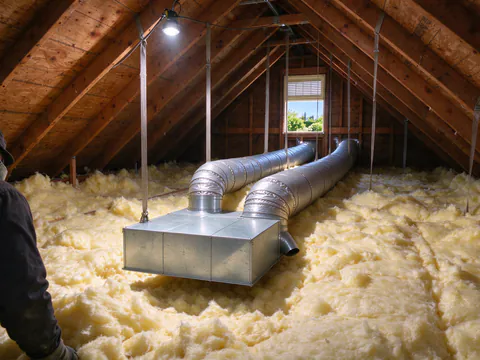
A return duct that leaks in the attic or garage pulls unfiltered air into the system, smoke included, and bypasses the filter entirely. Leaks of that kind are found by testing, and heat pump ductwork covers sealing and repair.
Cleaning the coils
The outdoor coil
The outdoor coil gives off heat in summer and gathers it in winter, and both jobs depend on air passing through its fins. Grass clippings, leaves, dust and plants growing against the cabinet all cut that airflow. In summer the result is higher pressures and more work for the compressor on hot afternoons (the hot weather guide explains why capacity falls as it gets hotter); in winter, more frequent icing.
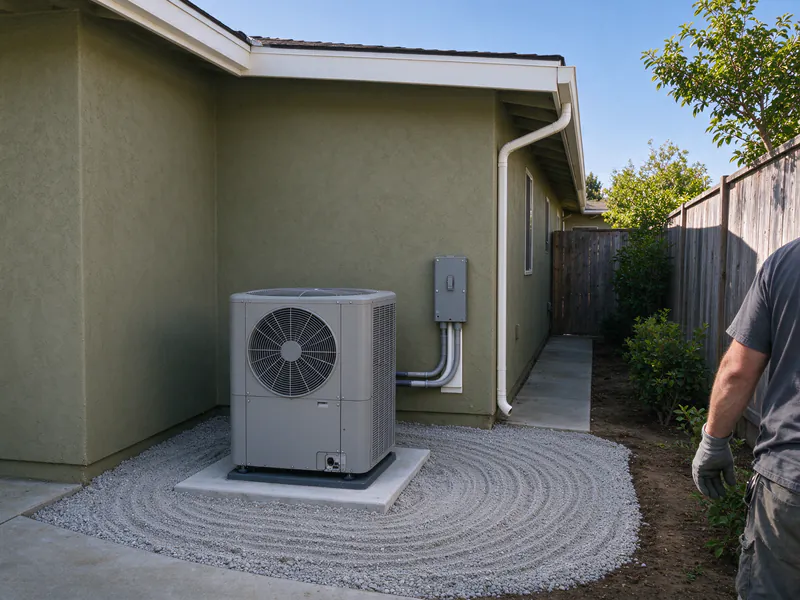
The coil is rinsed from the inside out where the cabinet allows, and the manufacturer’s clearances are restored around the unit. The placement guide covers those clearances.
The indoor coil
The indoor coil sits downstream of the filter, so a filter that fits loosely or is skipped for a few months lets dust bond to the wet coil surface. A dirty indoor coil restricts airflow the same way a loaded filter does. When the reading or the inspection shows buildup, cleaning is written up separately, because access depends on the air handler.
Condensate: the drain nobody watches
Sacramento’s cooling load is mostly dry heat: NOAA’s normals put the July dew point near 54°F on 90-degree afternoons. The indoor coil still runs below that temperature, so it condenses water through the cooling season. Algae and dust slowly narrow the drain line and the trap.
Where it matters most
An air handler in the attic or above a hallway ceiling sends water onto drywall when the drain backs up. The overflow switch is the safeguard, so it is tested on each visit, not assumed. A drain line with too little slope or a cracked pan is noted for repair.
Defrost and backup heat before fog season
On damp mornings near freezing, the outdoor coil frosts and the system runs a defrost cycle. NOAA’s hourly normals put the January 7 a.m. temperature at about 41.6°F, with one morning in ten at or below about 32°F and a mean dew point only slightly lower, which is when defrost runs most.
What the fall check covers
The fall visit checks that defrost starts and ends as designed, that the defrost water drains away from the pad rather than refreezing underneath, and that backup heat strips come on only when they should. On the valley floor, nights at 20°F or below are close to absent, so strips that run for hours point to a control setting. The backup heat and defrost guide explains the settings.
Refrigerant: readings, not top-offs
Refrigerant is not consumed in normal running, so the charge set at installation should stay put. Maintenance reads temperatures and pressures to confirm the system is running as it should. If the readings show low refrigerant, the next step is finding the leak, which turns the visit into a heat pump repair rather than a routine top-off.
Controls and SMUD time-of-day rates
On SMUD’s standard Time-of-Day rate, the summer (June through September) peak price from 5 to 8 p.m. is more than double the off-peak price. A schedule that cools the house before 5 p.m. and coasts through the peak shifts use without giving up comfort. In winter, the aux heat lockout and a gentle morning recovery keep backup strips from running when the heat pump can do the job. The electric bill guide covers rates for SMUD, Roseville Electric and PG&E.
What maintenance cannot fix
A visit keeps a system running as designed. It cannot correct a system that was oversized (the sizing guide explains how loads are set), ducts that are too small for the airflow, or an attic duct run that leaks badly. If those show up in the readings, the visit says so, and heat pump replacement or a duct project becomes the conversation. The lifespan guide covers what wears a system out.
What sets the cost of a visit
The price of a maintenance visit depends on the work it involves:
- Number of systems. Two-system homes take longer.
- Access. An attic air handler takes more time than one in a garage or closet.
- Coil condition. A rinse is part of the visit; a heavily fouled coil can need more.
- Filter type. Media cabinets and specialty filters cost more to replace than standard sizes.
- Findings. Repairs are priced separately and done only after you approve them.
If your equipment is under a manufacturer’s warranty, read its terms for any maintenance conditions, and keep the written notes from each visit.