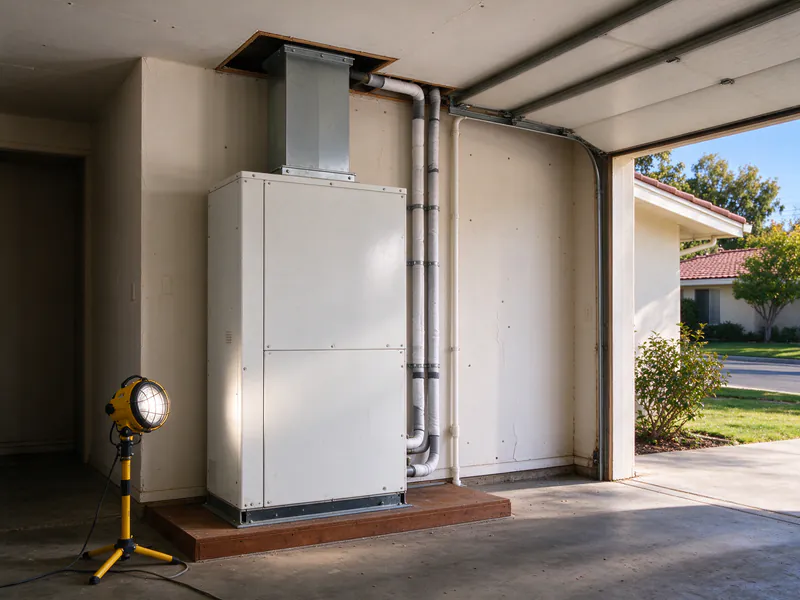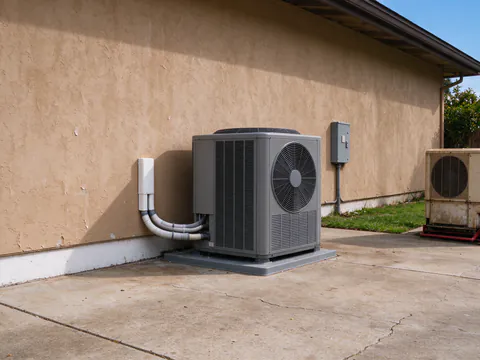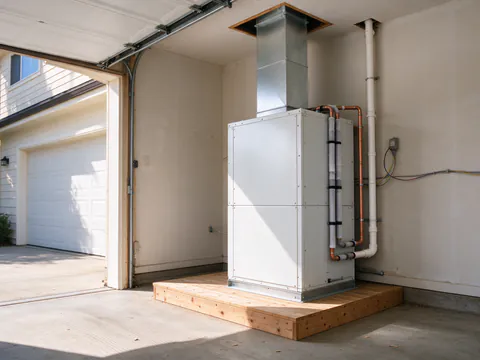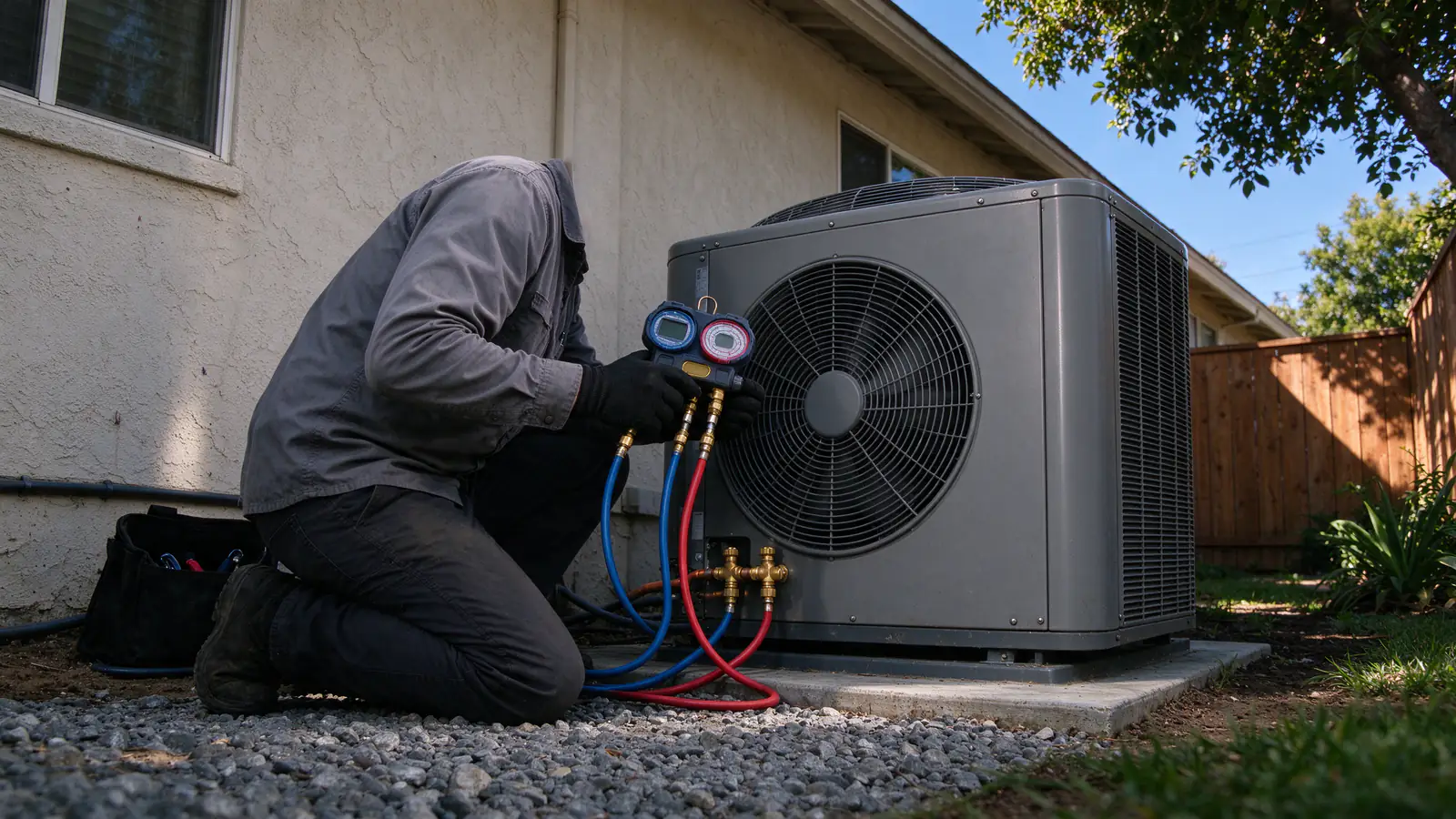
Tule Sacramento Heat Pump arranges heat pump repair across Sacramento County, south Placer County, east Yolo County and El Dorado Hills, with the work done by licensed and insured contractors. It covers ducted air-source heat pumps: split systems with an outdoor unit and an indoor air handler, and package units on a pad or roof. Each repair starts with finding the cause, because the same symptom can trace to a small electrical part or to a failing compressor.
Before anyone visits: what to check and what to write down
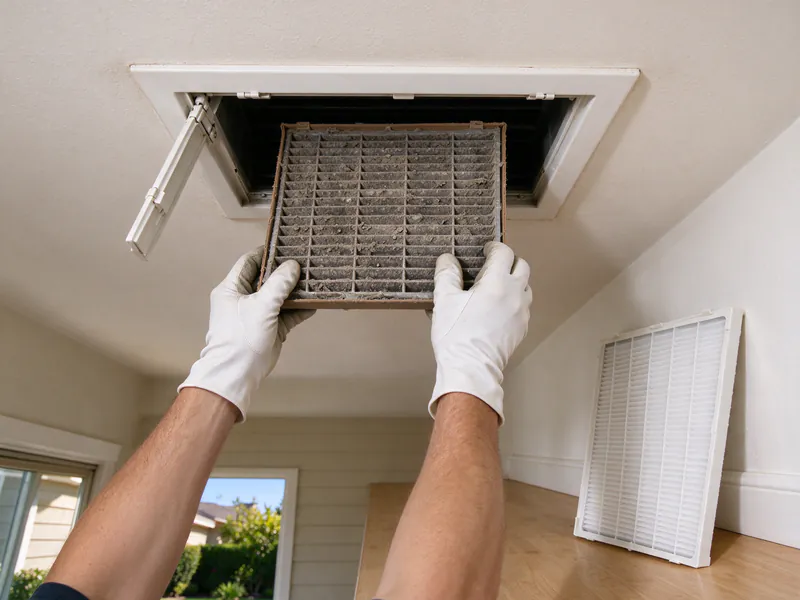
A few checks are safe for anyone and can save a visit. Make sure the thermostat is set to heat or cool rather than off or fan only, and that the setting is a few degrees past the room temperature. Look at the breaker for the outdoor unit and the air handler, and at the air filter.
What to note for the technician
Write down what the system does and when. Does the outdoor fan run? Is there ice on the coil or the copper lines? Is water dripping near the air handler? Does the problem show up only in the afternoon heat, or only on cold mornings? Those details narrow the diagnosis before any panel comes off.
Leave refrigerant, wiring and the inside of the outdoor unit alone. A heat pump holds a charged capacitor even with the power off, and refrigerant work requires recovery equipment.
What happens on the first visit
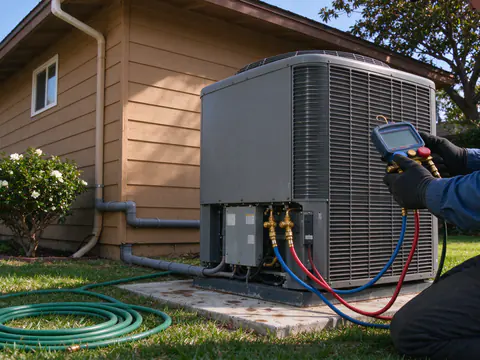
The visit works from readings rather than guesses.
- The basics. Thermostat setup, breakers, the outdoor disconnect, the filter and the condensate safety switch, which shuts the system off when a drain backs up.
- Electrical readings. The capacitor, the contactor, both fan motors and the compressor’s draw, compared with their ratings.
- Refrigerant readings. Temperatures and pressures in the mode that shows the fault, checked against the manufacturer’s charging data.
- Airflow. Static pressure and the blower, when rooms are weak or the coil is icing.
- Defrost. The control, the sensor and the reversing valve, when the complaint is winter ice or cool air.
The finding is written down: the failed part, what probably caused it and what the fix includes.
What common symptoms can mean
The same symptom can have several causes, which is why the readings come before the part.
Ice on the outdoor unit in winter
Some frost is normal. Sacramento’s January mornings average about 41.6°F at 7 a.m. at the Executive Airport, with one morning in ten at or below about 32°F, and January’s mean dew point is about 41°F, close to the air temperature. Damp tule fog mornings like that frost the coil and defrost cycles follow. A coil that stays iced points to a defrost control or sensor fault, a stuck reversing valve, low refrigerant or blocked airflow around the unit.
Ice on the lines in summer
Frost on the suction line or the indoor coil in cooling mode usually traces to too little air across the coil, from a clogged filter, a closed return or a failing blower, or to a low charge. Running the system iced can push liquid refrigerant back to the compressor, so it is switched off to thaw before the visit.
Falling behind on a 100-degree afternoon
Sacramento’s 1% cooling design is 98°F at the airport station, and the hottest 0.1% reaches 104°F, according to California Energy Commission data. A system sized to that design condition can drift a few degrees above setpoint on the hottest afternoons. A system that loses ground in ordinary heat suggests a dirty outdoor coil, a failing fan motor, low refrigerant or leaking attic ducts. The hot weather guide explains what to expect.
Backup heat running too often, or a high winter bill
On the valley floor, nights at 20°F or below are close to absent in NOAA’s normals, so backup heat strips should run mostly during defrost. If the aux heat light is on for hours, look at the thermostat’s staging and outdoor lockout settings first, then at the heat pump’s own capacity. SMUD’s winter peak runs 5 to 8 p.m., when backup heat costs the most. The backup heat and defrost guide explains the controls.
Water around the air handler
Condensate leaks come from a blocked drain, a line with too little slope, a cracked drain pan or a missing trap. An attic air handler is the expensive case, because water reaches the ceiling before anyone sees it. The safety switch should stop the system when the pan fills; if it did not, it is checked too.
Short cycling or new noises
A system that starts and stops every few minutes can be oversized (the sizing guide explains why), have a thermostat in a poor spot, be short of airflow or have a control fault. Rattles and hums trace to fan blades, mounting, a failing motor or line sets touching the framing.
Repair or replace: how the decision works
There is no single age at which a heat pump stops being worth repairing. What matters is which part failed, why, and what else the system is likely to need soon.
When repair is the clear answer
A failed capacitor, contactor, fuse or fan motor on a system that otherwise reads well is a repair. So is a clogged drain or a thermostat set up wrong. The step that matters is fixing the reason, such as a motor that overheated because the coil was packed with debris.
When a major part fails
A failed compressor or a leaking coil is a larger decision. The repair price is set against the system’s age, its efficiency and the condition of the ducts and the other coil. A repair that leaves a tired outdoor unit paired with a new part can be followed by the next failure. The lifespan guide covers what shortens a system’s life.
The refrigerant question
The EPA limits new residential systems to refrigerants with a global warming potential below 700, which has moved new equipment to A2L refrigerants such as R-454B or R-32. A replacement coil has to match the outdoor unit’s refrigerant, so an old R-410A outdoor unit cannot be paired with a new A2L coil. The refrigerant guide explains the rule and the older-stock exemption.
When a repair becomes a permit job
Under the California Energy Commission’s alteration rules, replacing the indoor coil, the outdoor unit, the air handler or a package unit triggers duct sealing by the installer and verification by an ECC-Rater, plus refrigerant charge and airflow checks. A thermostat must also be a digital setback model when a refrigerant component is replaced. That adds a permit and an inspection to the job, and it is part of the comparison; the permit and Title 24 guide walks through each step.
If replacing makes more sense
When an existing heat pump is replaced with a qualifying two-stage or variable-stage system, SMUD pays $1,000 on its electric-to-electric rebate. It requires qualifying equipment installed by a participating contractor in the SMUD Contractor Network, permits and a passing Title 24 verification. Rebate-qualified installations are available on request, with eligibility confirmed per project. The federal 25C tax credit ended for equipment placed in service after December 31, 2025.
Heat pump replacement covers the full change-out, and the replacement cost guide explains what moves the price.
Related resources
If the failure is the indoor unit, air handler replacement covers the coil-matching and attic access questions. Several of the symptoms above start with filters, coils and drains, which heat pump maintenance keeps in order. For an old gas furnace with a heat pump question attached, see gas furnace to heat pump conversion.