
If a Citrus Heights house already heats with electricity, the question isn’t whether to go electric. It is how much less electricity the same heat could take. Tule Sacramento Heat Pump replaces electric furnaces, older heat pumps and gas systems with ducted heat pumps throughout Citrus Heights, from Sunrise Ranch and Birdcage to the Arcade Creek and Rusch Park areas. Licensed and insured contractors do the installation.
Already electric: what a heat pump changes
The Census Bureau’s American Community Survey puts the share of Citrus Heights households heating with electricity at 47.0%, the highest among the cities this site covers, against 50.5% on gas. The survey doesn’t say what kind of electric heat, so the starting point is checked house by house.
From an electric furnace or strip heat
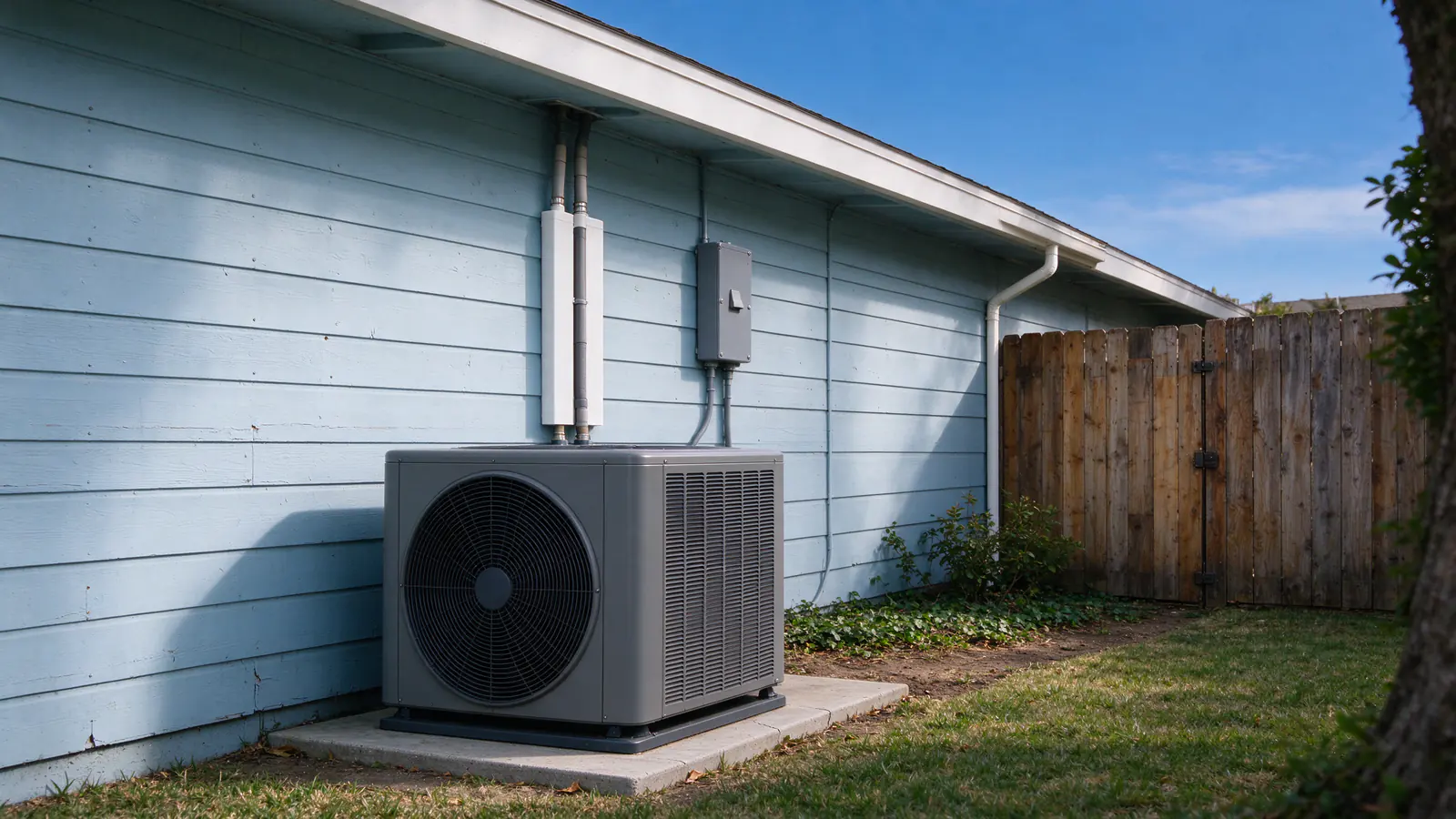
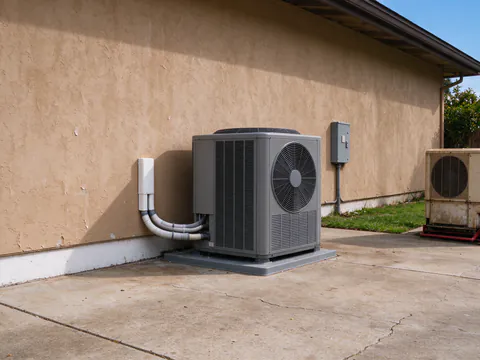
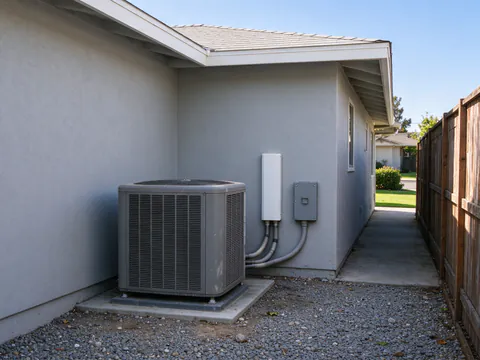
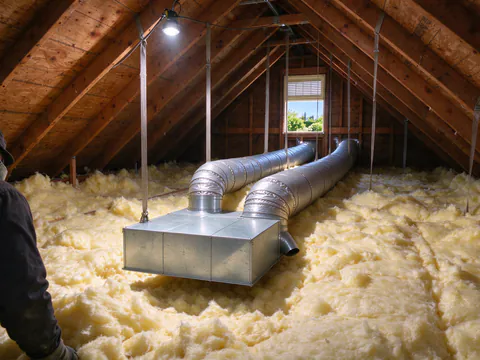
An electric furnace turns each kWh into one kWh of heat. A heat pump moves heat from outdoors instead, so on most winter days it delivers more heat than the electricity it uses. That gap is the bill difference, and it replaces the air conditioner at the same time. This is a heat pump replacement scope with a new air handler.
From an older heat pump
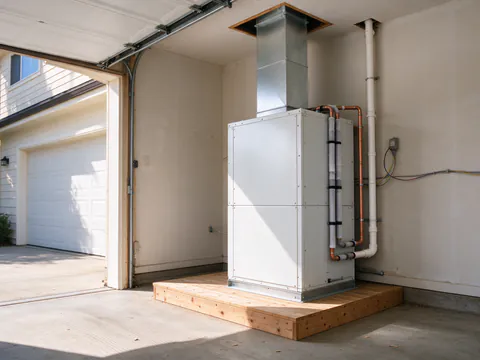
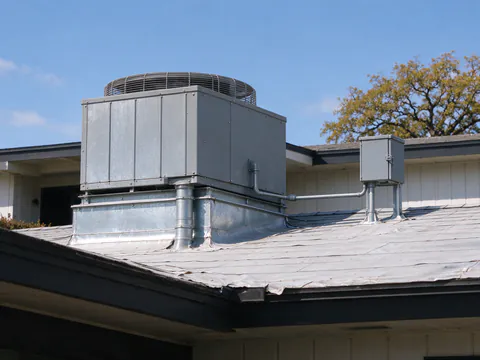
Where the house already has a heat pump, the job is a like-for-like change of the outdoor unit and the air handler or coil, with the ducts tested. A package unit on the roof or a slab is a package heat pump replacement.
From wall or baseboard heaters
No ducts means a ducted heat pump needs a duct system first, which turns the job into a larger project. Ductless mini splits are a separate trade and are not offered here.
What Title 24 allows when electric heat is replaced
The CEC’s compliance manual for alterations says replacement space heating may not use electric resistance as the primary heat unless one of its exceptions applies. In practice, an electric furnace that wears out is replaced by a heat pump, with resistance strips kept only as backup.
The same rules apply to every change-out here:
- Duct sealing and testing by an ECC-Rater, to 10% or less total leakage, or every accessible leak sealed.
- Refrigerant charge verification, required for heat pumps in every climate zone, with at least 300 cfm of airflow per ton.
- A digital setback thermostat whenever a refrigerant component is replaced.
The permit and Title 24 guide covers the paperwork.
Sizing for a 26°F design morning
What the design table shows
The CEC’s design data lists Citrus Heights at 98°F for cooling at the 1% level and 104°F at 0.1%, the same as Sacramento Airport. On the heating side it lists 26°F at 0.2%, the coldest value among the valley stations in its east-county table, where Sacramento Airport sits at 31°F.
What that means for the equipment
Cold-climate equipment isn’t required on the valley floor, where nights at 20°F or below are close to absent in NOAA’s normals. What the colder design changes is the check on heating capacity at 26°F and the size of the backup heat. The winter issue is damp mornings near freezing, which bring frequent defrost cycles. The aux heat and defrost guide explains how staging keeps the strips from running more than they need to.
1960s and 1970s houses: ducts and service size
Original ducts
The ACS counts 61.9% of Citrus Heights homes as built before 1980 and 7.3% in 2000 or later. In a house of that era, the original ducts and the electrical service are the two places scope changes. Ducts that fail the leakage test get sealed at every accessible joint and boot, and crushed runs or small returns point toward duct repair or replacement.
The electrical service
On the electrical side, a heat pump replacing an electric furnace can lower the peak draw if its backup strips are smaller than the old furnace’s elements, but the panel and breaker sizes are still checked against the new equipment’s nameplate. SMUD treats services of 125 amps or smaller as a separate class for its optional low-use rate, a reminder that small panels exist in its territory.
Permits through the City’s online portal
Citrus Heights runs its own building department, separate from Sacramento County. The City states that all building permits must be submitted and processed online through its Citizen Access Portal, and its permit requirements list replacement of a furnace or central air conditioner and replacement of mechanical equipment. The permit fee is set by the City and appears as its own line in the quote.
SMUD rebates for an electric-to-electric change
Citrus Heights is SMUD territory, with gas from PG&E. Replacing an electric system with a qualifying two-stage or variable-stage heat pump earns SMUD’s $1,000 electric-to-electric rebate. A gas-to-electric conversion qualifies for up to $3,000. Both require qualifying equipment installed by a participating contractor in the SMUD Contractor Network, permits and a passing Title 24 verification.
Rebate-qualified installations are available on request. The SMUD rebate guide lists the conditions, and the replacement cost guide and electric bill guide show what the change does to cost on SMUD’s rates.
What SMUD’s rates mean for electric heat
Outside summer, SMUD charges $0.1285 a kWh off-peak and $0.1776 in the weekday 5 to 8 p.m. peak. Resistance heat pays that price for every unit of heat it delivers. A heat pump that averages a COP of 2 over a winter needs half the kWh for the same heat, and one averaging 3 needs a third, before any change in thermostat habits. Those are illustrations of the arithmetic, not a promised saving; the real figure depends on the house and the equipment.
A Citrus Heights project from start to finish
- Phone or form. The heat type, the equipment’s location and age, and the address.
- On-site assessment. Load calculation room by room, duct leakage and static pressure, the electrical service, and a spot for the outdoor unit with drainage for defrost water.
- Written scope. Equipment, backup heat size, any duct work and the permit, filed online with the City.
- Installation day. Old refrigerant recovered, equipment replaced, lines brazed and evacuated, the system charged to the manufacturer’s specification.
- Close-out. Airflow, charge and strip heat staging confirmed, then the ECC-Rater test and the City’s final.